Showing posts with label job advice. Show all posts

Saturday, August 2, 2025

Science job openings in sunny Brisbane, Australia

Bribie Island, just north of Brisbane.

The University of Queensland has just advertised several jobs that may be of interest to readers of this blog, particularly those seeking to flee the USA.

There is a junior faculty position for a theorist working at the interface of condensed matter, quantum chemistry, and quantum computing.

There is also a postdoc to work on the theory of strongly correlated electron systems with my colleagues Ben Powell and Carla Verdi.

There is a postdoc in experimental condensed matter, to work on scanning probe methods, such as STM, with my colleague Peter Jacobson.

Glasshouse Mountains. Just north of Brisbane.

Thursday, July 10, 2025

What Americans might want to know about getting a job in an Australian university

Universities and scientific research in the USA are facing a dire future. Understandably, some scientists are considering leaving the USA. I have had a few enquiries about Australia. This makes sense, as Australia is a stable English-speaking country with similarities in education, culture, democracy, and economics. At least compared to most other possible destinations. Nevertheless, there are important differences between Australia and the USA to be aware of, particularly when it comes down to how universities function (and dis-function!) and how they hire people. 

A few people have asked me for advice. Below are some comparisons. Why should you believe me? I spent eleven years in the US (1983-1994) and visited at least once a year until 2018. On the other hand, there are some reasons to take what I say with a grain of salt. I have never been a faculty member in a US university. I retired four years ago from a faculty position in Australia. I actually haven't sat on a committee for almost ten years :). Hopefully, this post will prompt other readers to weigh in with other perspectives.

There are discussions in Australia about trying to attract senior people from the USA to come here. Whether that will come to anything substantial remains to be seen.

The best place to look for advertised positions is on Seek. 

Postdocs

This is where the news is best. Young people in the USA can apply for regular postdoc positions. Most are attached to specific grants and so involve working on a specific project. 

Ph.D. students

Most of the positions go to Australian citizens who get there own scholarship (fellowship) from the government. These are not tied to a grant or a supervisor (advisor) There are a few positions for international students, but not many. Usually they go to applicants with a Masters degree and publications.

Ph.D's are funded for 3 to 3.5 years. There is no required course work. Australian students have done a 4-year undergraduate degree and no Masters. This means tackling highly technical projects in theory is not realistic, except for exceptional students.

Faculty hiring is adhoc 

There is no hiring cycle. Positions tend to be advertised at random times depending on local politics, whims and bureaucracy. Universities and Schools (departments) claim they have strategic plans, but given fluctuations in funding, management, and government policy positions appear and disappear at random. Typically, the Dean (and their lackies), not the department, control the selection process, particularly for senior appointments. The emphasis is on metrics. Letters of reference are sometimes not even called for before short listing. Some hiring is done purely from online interviews and seminars.

Bias towards insiders 

People already in the Australian system know how to navigate it best. They may also already have a grant from the Australian Research Council and have done some teaching and (positive) student evaluations. They are known quantities to the managers and so a safer bet than outsiders. If you want to get a junior faculty position here (a lectureship) your chances may be better if you first come as a postdoc. However, there are exceptions...

Current funding crunches

Unfortunately, I fear the faculty market may be quite cool for the next few years. Many universities are actually trying to sack (fire) people due to funding shortfalls. These budget crises are due to post-covid, mismanagement, and the government trying to reduce international student numbers (due to the politics of a housing and cost-of-living crisis).

Australian Research Council

This is pretty much the sole source of funding in physics and chemistry. This is quite different to the USA where there were (pre-Trump) numerous funding agencies (NSF, DOE, DOD, ...).  They are currently reviewing and redesigning all their programs and so we will have to wait to see how this may impact the prospects of scientific refugees from the USA. (They used to have quite good Fellowship schemes for all career stages that were an excellent avenue for foreigners to come here). Some of my colleagues recommend following ARC Tracker on social media to be informed about the latest at ARC.

Thirty years ago, I came back to Australia from the USA. I had a wonderful stint doing science, largely because of generous ARC funding. Unfortunately, the system has declined. But I am sure it is better than being the USA right now.

There are many more things I could write about. Some have featured in previous rants about metrics and managerialism. Things to be aware of before accepting a job include faculty having little voice or power, student absenteeism, corrupt governance, and there is no real tenure or sabbaticals.

Thursday, August 22, 2024

My mental health update

I have struggled with my mental health on and off since the time of my Ph.D. studies. Several readers have commented that has been helpful for them to hear my story. Here I give a small update on both my health and some recent reading.

I have been thinking about the issue more because I have been invited to give a talk in October for a research centre at UQ, as part of Mental Health Week. I may adapt a talk that I gave for a school colloquium at UQ six years ago. I welcome suggestions for things people think I should talk about.

My mental health is the best it has been for almost a decade. There are probably many reasons for this: retirement, managing stress, no international travel, being connected to a church community, and practising the basics (diet, exercise, less screen time, less caffeine, ...), ...

Until a year ago, I believed I would be on antidepressants for the rest of my life. But my doctor told me we should explore my getting off antidepressants. It is now the view of the medical establishment that there are too many people on them who do not need to be, there can be long-term complications, and that the longer a patient is on them the harder it is to get off them. Over the past 2 years, The Economist had helpful articles along these lines (see below).

In April we agreed that we would start the experiment of reducing my dose, following the now standard practice of slowly reducing the dose every three weeks. He warned me to look for side effects, such as random brain zaps. There were no side effects. I got to zero dosage a month ago.

Unfortunately, I am now experiencing one side effect which I have now learned is not uncommon: uncontrollable sobbing. The first instance was July 21 when I learned that Biden was not going to run again for President. The fact that this triggered ten minutes of sobbing shows there is something not quite right with my brain chemistry!

I had several other incidents with my family. The tears are out of proportion to the significance of the event that triggers them. Sometimes I choke up when talking to people I care about or on an issue that concerns me.

I had an appointment with my doctor this week and we agreed that for now, we would stay the course, not resume the medication, and monitor the situation.

How to make better use of antidepressants: Identify those who really need them, and wean other people off them

(The Economist, October 19, 2022)

Antidepressants are over-prescribed, but genuinely help some patients: In around 15% of cases, they offer large benefits

(The Economist, January 20, 2023)

The graphs above are amazing. They show several striking things.

1. There is a massive placebo effect for antidepressants. This is shown by the two coloured curves being almost identical.
2. There is a massive variation between patients with regard to how effective the drugs are. This is shown by the very broad distribution. It reminds me of journal impact factors: the distribution is so broad that discussions about the mean are meaningless.

Antidepressants can cause withdrawal symptoms – here’s what you need to know

(The Conversation, June 23, 2023)

Psychiatry’s Incurable Hubris: The biology of mental illness is still a mystery, but practitioners don’t want to admit it.

(The Atlantic, April 2019).

Disclaimer. I am not a mental health professional. Mental health is an incredibly complex issue. Everyone is different. Do not take any action based on what you read about my experience. I do not present my experience as an example others should follow. Rather I present my experience so others may know that mental health struggles are not unusual, including among those who may appear to have "successful" lives.

Tuesday, July 9, 2024

Basic realities to accept about applying for funding

The advice that follows is directed to young people who are starting out in requesting funding for a project or an annual budget. My advice is based on about thirty years of experience of writing grant applications, reviewing requests, and being involved in making final decisions about applications. My experience has involved national research funding bodies, internal university schemes, charities, and NGOs. Over the years, I have been involved with requests in the range from a few thousand dollars to a few million dollars.

Accept reality
The world is messed up. Systems are broken. They are not the way they should be. Bad decisions are made. Processes are imperfect. I am all for trying to change things. However, when you make a funding application your chances of success are best if you accept the system and engage with it as it is today. Try to change it tomorrow. 

Put yourself in the shoes of the decision-makers.
You may not respect them or think they are particularly competent or well-qualified to make decisions about your funding request. However, put that aside and consider that they may be in an unenviable position. They are working within an imperfect system. They have limited time to read and evaluate a trove of applications, many on topics they do not really understand. They have limited resources to allocate. Most want to evaluate those scarce resources in a fair and equitable manner. In most contexts the ratio of available funds to the total amount of funds requested by all the applicants is somewhere in the ratio of 0.03 to 0.2. This means they need to reject a lot of applications and slim down the budgets of those that are accepted. 

You have to start with small amounts of money and build up.
Trust and success are incremental. You first get a grant for a few thousand dollars. You show that you have used that well to accomplish something. You may have to do that a few times before you get tens of thousands of dollars. You then use that to accomplish something bigger. And so on it goes.
You may think you deserve to receive several $100Ks and jump this process. However, it is highly unlikely to happen. You need to prove yourself.
In different words, any year do not ask for significantly more than you were budgeted last year. 

Every budget line item must be carefully justified.
Is each item really essential for successful completion of the project? We would all like to have a better computer, more technical support, a personal assistant, lots of international travel to exotic locales, release from other responsibilities, ...
But is each item necessary? Is each item consistent with your level of seniority and experience? Or is there a cheaper option? Could someone else fund it?
These issues are not just about good use of resources but also your credibility as someone who is a team player willing to accept institutional realities and limited resources.

The greater the requested budget the greater the scrutiny of the application.
Hence, asking for less money actually increases your chance of success. If your budget is 2 or 3 times the budget of competing applications the funding agency will almost always think that it is better to fund 2 or 3 groups rather than just one. 

Check your attitude.
You should have confidence that what you are doing is important and worth funding. However, that is not the same as making snide comments about competitors, stroking your ego, overselling the significance of what you are doing, or expressing grievances about perceived past slights and criticisms of your work. Exhibiting such attitudes only hurt your chances of success.

Saturday, June 1, 2024

Should Ph.D. students choose to teach?

In Australia, most Ph.D. students are fully funded by scholarships to allow them to focus on their research. This is unlike in the USA where many students must be TAs (teaching assistants) to be paid. 

In most Australian universities, such Ph.D. students can earn extra income by being tutors (same as TAs) for undergraduate courses. Many do, as earning extra money is attractive. Ph.D. students doing teaching saves universities tons of money as it means they don't need to hire and pay permanent academic staff to do this tutoring.

What is my advice to students who have this option? Here are some of the advantages and disadvantages for a Ph.D. student doing such tutoring.

Advantages

You earn additional income.

Having teaching experience listed on your CV may help you get a faculty position at some institutions. For example, in Australia, this seems to be almost a pre-requisite these days. Furthermore, if you can be innovative, and get high student evaluations, that may be viewed favourably. But that really concerns lecturing and not tutoring.

You usually learn a lot from teaching, even lower-level courses.

It can be enjoyable and satisfying. It can provide a break from thinking just about your Ph.D. research.

If you are fortunate enough to eventually get a faculty position this experience will make it easier to handle the formidable challenges of starting out teaching.

It may create some goodwill towards you in your department. You may be seen as a team player and a good departmental citizen.

You may need the money. For example, if you are supporting a family or if you are from a Majority World country and want to send money home to extended family.

Disadvantages

Foremost, it can consume a large amount of time and energy that reduces your research productivity. It reduces your mental space. You may lose research momentum and not complete your Ph.D. on time.

There can be a significant financial opportunity cost. Suppose that doing the teaching delays you completing your Ph.D. by six months. The lost six-month salary will probably be much greater than the amount you earned from doing the teaching.

It can be frustrating to deal with students who are not that interested in learning and are only concerned with grades. Furthermore, there may be the added stress of having to deal with students who make formal complaints about your teaching or their grades.

It may not add a lot to your CV, particularly if your student evaluations are average. They will probably be average or even below average since you are starting out.

If you don't do a stellar job and/or there are a few disgruntled students your reputation in the department may suffer, perhaps unjustly.

On balance, I think it depends on the individual: their personal financial situation, personality, career goals and stage in the Ph.D. In some cases, I encourage people to do this, although only for one or two semesters. In other cases, I discourage it. The main thing is to make a well-informed decision which takes into account the pros and cons. 

Students also need to be wary of the vested interests of faculty and university management that will push them towards teaching, possibly against the student's best long-term interests.

Aside. I often forget what posts I have written in the past. I really thought I had written this post before. All I could find is one on Should postdocs teach?

I welcome comments, particularly from current and former Ph.D. students who have negotiated this issue. What would you advise?

Wednesday, May 8, 2024

The relevance of Labor Day to physicists and philosophers

This past Monday, May 8, was a public holiday in Queensland, marking Labor Day. I don't know why we don't celebrate it on May 1, but that does not matter.

In honour of the event, I post two relevant resources. The first resource is a moving video by Sabine Hossenfelder, who has carved out a post-academic income as a populariser of physics. The video is funny and sad, describing her own experience in academia leading to "Death of a Dream".


Sabine has many poignant observations about the dysfunctionalities of physics in academia, from the personal to the intellectual.

I find it sad that people who leave academia because they could not find a permanent job see themselves as a "failure." First,  most of the select few who get permanent jobs do so because they are at the right place at the right time, not because they are so much more brilliant and productive than others. Second, there is so much more to life than professional success. Finally, Sabine has been an incredible success. She has been able to popularise physics far beyond what has been achieved by others with big names and lots of resources. Furthermore, Sabine has made a significant contribution to the physics community by calling out hype and BS.

The second resource to mark Labor Day is an article, 

It puts a specific (alarming) incident in the broader context of the history of how and why the governance and management of Australian universities have been captured by the ideology of neoliberalism. This has been facilitated by the opportunism and vanity of mediocre academics who become "managers" with million-dollar salaries.

Monday, December 5, 2022

Junior faculty position in condensed matter available at UQ

The physics department at the University of Queensland has just advertised for a junior faculty position in condensed matter. Only applications from women will be considered. The advertisement is here and the closing date is January 19.

The photo is of the beach at Bribie Island, my favourite holiday location, about one hours drive away.

Aside: it was gratifying that the last faculty hired in condensed matter at UQ, Peter Jacobson, first heard about the position on this blog.

Thursday, October 27, 2022

A few things I have learnt from professional editors

 Until a few years ago I had never engaged with or received feedback from my writing from a professional editor. This is because the only genre I wrote that involved an editor was papers for scientific journals. But the editors of journals are not really editors in the literary sense. They are more like gatekeepers. Colleagues and collaborators may provide feedback on written work, but again they are amateurs.

In the past few years, I have been writing some popular articles and a popular book and have been part of a writing group. In the process, I have engaged with several professional editors. They were getting paid to make my writing better. I have learnt a lot. Here are a few of the things. On the one hand, some of this may not seem that relevant to scientific articles and grant applications. On the other hand, think of the joy of reading a beautiful scientific article, such as those by Roald Hoffmann. Think of how many papers you try to read and you cannot figure out what they are actually about. Also, I think this is particularly relevant to writing review articles, somewhat of a lost art.

Can it be shorter? Most of the writing I have worked with editors on had a strict word limit. I struggled to stay within it. However, the editors forced/helped me in two ways. First, the fixed word limit helped me structure the work and be realistic about the volume of content. For example, for my Very Short Introduction, I broke down the 35,000-word limit to ten chapters, each of about 3500 words. This made the writing quite manageable. Second, editors helped by cutting out content that was not essential, even when I loved it. Third, editors rewrote some of my sentences making them both shorter and clearer. Seeing their improvements I became aware of some of my bad habits.

Find your voice and tell a story. We are all unique and each piece of writing is unique and is making a unique point. Don't try and be someone else. A grant application needs to make the case that your proposed project is unique and that you are uniquely qualified to do it. Your writing will be more engaging and compelling if it expresses your unique perspective and there is a natural narrative.

A few of these suggestions overlap with some of Stephen King's writing tips. 

Tuesday, October 11, 2022

Systemic flaws that are undermining good science

Everyone likes to be right. But, sometimes I really wish I was wrong, particularly about problems I see in the world. I wish I was wrong about science being broken. Some of these issues I discuss in the final chapter of Condensed Matter Physics: A Very Short Introduction, due to the relevance of these problems to the future of the field.

Similar concerns were discussed with greater clarity, way back in 2014, by four scientists who are much more experienced and distinguished than I am. 

Rescuing US biomedical research from its systemic flaws 
Bruce Alberts, Marc W. Kirschner, Shirley Tilghman, and Harold Varmus

Positions the different authors have held include President of the US Academy of Sciences, President of Princeton University, and Director of the National Institutes of Health.

Although the article focuses on biomedical research I think the three words "medicine, biomedical, and biology" could be replaced respectively with "technology, materials science, and condensed matter physics" almost everywhere in the article. 

Here are a few quotes.

The long-held but erroneous assumption of never-ending rapid growth in biomedical science has created an unsustainable hypercompetitive system that is discouraging even the most outstanding prospective students from entering our profession—and making it difficult for seasoned investigators to produce their best work. This is a recipe for long-term decline, and the problems cannot be solved with simplistic approaches. Instead, it is time to confront the dangers at hand and rethink some fundamental features of the US biomedical research ecosystem.
... the remarkable outpouring of innovative research from American laboratories—high-throughput DNA sequencing, sophisticated imaging, structural biology, designer chemistry, and computational biology—has led to impressive advances in medicine and fueled a vibrant pharmaceutical and biotechnology sector. In the context of such progress, it is remarkable that even the most successful scientists and most promising trainees are increasingly pessimistic about the future of their chosen career.
... hypercompetition for the resources and positions that are required to conduct science suppresses the creativity, cooperation, risk-taking, and original thinking required to make fundamental discoveries.
The system now favors those who can guarantee results rather than those with potentially path-breaking ideas that, by definition, cannot promise success. Young investigators are discouraged from departing too far from their postdoctoral work, when they should instead be posing new questions and inventing new approaches. Seasoned investigators are inclined to stick to their tried-and-true formulas for success rather than explore new fields. 
One manifestation of this shift to short-term thinking is the inflated value that is now accorded to studies that claim a close link to medical practice. Human biology has always been a central part of the US biomedical effort... Many surprising discoveries, powerful research tools, and important medical benefits have arisen from efforts to decipher complex biological phenomena in model organisms. In a climate that discourages such work by emphasizing short-term goals, scientific progress will inevitably be slowed, and revolutionary findings will be deferred.
As competition for jobs and promotions increases, the inflated value given to publishing in a small number of so-called “high impact” journals has put pressure on authors to rush into print, cut corners, exaggerate their findings, and overstate the significance of their work. 
The development of original ideas that lead to important scientific discoveries takes time for thinking, reading, and talking with peers. Today, time for reflection is a disappearing luxury for the scientific community. 
...administrative tasks are taking up an ever-increasing fraction of the day and present serious obstacles to concentration on the scientific mission itself. 

The following is particularly true of luxury journals. 

Professional editors are increasingly serving in roles played in the past by working scientists and can undermine the enterprise when they base judgments about publication on newsworthiness rather than scientific quality. 
Even after they have landed a research position in academia or research institutes, new investigators wait an average of 4–5 y to receive federal funding for their work compared with 1 y in 1980 (2). Two stark statistics tell much of the tale—the average age at which PhD recipients assume their first tenure-track job is 37 y, and they are approaching 42 y when they are awarded their first NIH grant.

Although it varies across fields and individuals, I get the impression that most scientists do their best work in the rough age range of 35-45. Currently, people are spending most of these years looking for a permanent job and then applying for grants, rather than actually doing science.

The graph below shows just how much the system changed in just thirty years. NIH grants became "gentrified". In different words, all the grants now go to "old farts" doing the same old thing, rather than to "young turks" who want to try new things and have a real impact.

Percentage of NIH R01 Principal Investigators aged 36 and younger and aged 66 and older, 1980–2010


The authors did make some concrete proposals and in a follow-up article, they discuss a broader meeting held to discuss the issues.

Addressing systemic problems in the biomedical research enterprise

To what extent progress has been made in the biomedical community in the past eight years I do not know.

Thursday, June 9, 2022

Panel on mental health

 In the School of Mathematics and Physics at UQ there is an Early- and Mid-Career Academic group who organise activities to support one another. Today they organised a panel discussion on "Mental Health, Wellness and Resilience".

I commend them for their initiative. Before covid, they organised a single forum which I spoke at and thought was particularly good.

I am one of the panelists. As someone who has struggled with mental health for four decades now, here are a three of the points I want to make.

Practise the basics: eat and drink healthy, sleep, rest, exercise, control screen time, and connect to community.

Get professional help, sooner than later. Be open to medication, counselling, and expertise. 

Live according to your own personal values, rather than those that your boss or university management may want you to have.

One of my fellow panelists, Marissa Edwards, brought to our attention this recent article in The Conversation, Where has the joy of working in Australian universities gone? It is pretty disturbing, but unfortunately not surprising.

Tuesday, January 18, 2022

Graduate students are people

Every scientist is a person. They have a unique personality and a unique life story. Their family, friends, education, hopes, romances, cultural background, past disappointments have shaped who they are today. This past has had a significant influence on their current motivation, fears, ability to work with others, confidence, sense of identity, and manner of communication. It is important that we grapple with all this complexity if we are to appreciate and respect others, and to help them be successful. Graduate students are not slaves, robots, or all the same. Graduate students are people.

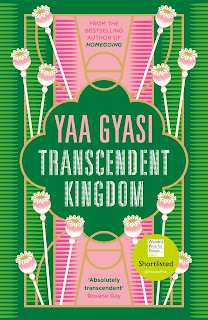
These complexities are too often overlooked. But we must engage them if we are to personally care for students and colleagues, and relate to them in a manner that helps them be successful. These issues were brought home to me recently reading the novel, Transcendent Kingdom by Yaa Gyasi. I thank my daughter for the gift, particularly as it was not the kind of book that I might normally have sought out.

The main character in the novel is Gifty, a graduate student in neuroscience at Stanford. Her parents immigrated to the U.S.A from Ghana and she grew up in Alabama, just like the author. Gifty's choice of research topic is motivated by her life experience including her brother's struggle with drug addiction. The research  described in the novel is actually based on a real scientific paper written by a friend of the author.

Molecular and Circuit-Dynamical Identification of Top-Down Neural Mechanisms for Restraint of Reward Seeking

Christina K. Kim, Li Ye, Joshua H. Jennings, Nandini Pichamoorthy, Daniel D. Tang, Ai-Chi W.Yoo, Charu Ramakrishnan, Karl Deisseroth

The novel gives an inside view of the life of a graduate student, describes experiments on mice, including the use of fluorescent proteins to image brain activity. Although science and graduate education is not the main point the novel, it may be good to give or recommend to non-scientists that you would like to understand a little of your world. The novel is easy to read and written in beautiful language.  The main character (author) is an astute observer of herself, others, and social dynamics. The novel captures some of the intensity, independence, stubbornness, and introversion of a brilliant student.


The narrative naturally engages with a wide range of issues, including the immigrant experience and the associated prejudice, racism, poverty, dislocation, and alienation that are too often encountered. It considers family relationships, particularly the bond and tensions between a mother and an adult child. It gives a picture of what it may be like to be a young woman of colour in an elite institution. Then there is sexuality, white Pentecostal churches in the USA, science and religion, mental illness, drug addiction, a personal face on the opioid crisis, the philosophy of neuroscience, including the mind-brain problem,... This does seem like a long list of issues but the author manages to engage with them in a natural and meaningful way as part of a coherent narrative.

Perhaps the only criticism I might have is that I felt that the ending was a little too quick, neat, and may betray the complexity that the rest of the novel so beautifully captured.

Here are some other reviews and articles about the novel that I found most interesting. A review in the Washington post, A review in The New York TimesThe back story of how a visit to a friends lab at Stanford led Gyasi to write the book.

Tuesday, November 2, 2021

How to move towards doing Deep Work

"Shallow work is non-cognitive, logistical or minor duties, often performed while distracted. These efforts require little cognitive effort, tend to create little value, and are usually easy to replicate." Examples include replying to emails, browsing websites, looking at social media, filling in forms, and attending meetings.

"Deep work is the ability to focus without distraction on a cognitively demanding task. These efforts create new value, improve your skill, and are hard to replicate.”

A colleague told me that Cal Newport's book, Deep Work, revolutionised his professional life.  These two short videos give a nice summary, focusing on quite practical ways to implement the ideas. They are both based on this article by Dan Silvestre.


Monday, October 18, 2021

Management is not leadership. II

 Previously, I have argued that being in management is neither a necessary nor a sufficient condition for showing leadership. I have also discussed how some articles about management, such as in the Harvard Business Review, can be helpful in academic contexts. This is in spite of the fact that I detest the idea that the university is a "business".

Here I bring the two points together. There is a nice short article in the HBR,Three Differences Between Managers and Leaders by Vineet Nayar

Counting value vs Creating value. Only managers count value; some even reduce value by disabling those who add value.

Circles of influence vs Circles of power. Managers have subordinates and leaders have followers. 

Leading people vs Managing work. Management consists of controlling a group or a set of entities to accomplish a goal. [Leaders]... influence, motivate, and enable others to contribute toward organizational success. 

Friday, September 24, 2021

Time management and mental health

Mental health and time management continue to be a big issue for many, including me. Both challenges are compounded by the upheaval associated with the pandemic.

I have only recently come to see that time management is not just an issue of efficiency and productivity. It is but also about stress reduction and good mental health. I like order and so I am less anxious and less prone to overstimulation if my environment is free of clutter and I have well-defined tasks. Clutter (books, papers, folders,...) in plain view reminds me of unfinished tasks and can distract me. Clutter can also be electronic (e.g., on my computer "desktop" or email inbox).


Things I need to be more disciplined about include the following.

I love learning new things. Hence, I am easily distracted, particularly when online.

I need a clear goal for each task.


I am finding regularly reviewing these questions and suggestions helpful. In particular, I try to have built into my schedule the following before dinner.

a. Take Priya (our cute dog) to the park for ball time. This helps clear my head and        keeps her happy. 

b. Get ready for the next day.

    Put away all files, papers, and books, both physical and electronic.

    Plan the following day, especially making time blocks for specific tasks, both large and small.

    Collect all the materials I need for tomorrow.


On a related matter, a colleague has been singing the praises of Cal Newport's new book, A World Without Email: Reimaging Work in the Age of Overload. Just reading the first chapter reminds me how deep the problem is. Fortunately, he has some concrete suggestions of possible solutions.

If you have read it, I welcome comments on it.


Another colleague told me that Newport's book, Deep Work, revolutionised his professional life. Previously, I have posted about Deep Work, including his argument that we should quit social media. 


Thursday, June 10, 2021

Universities are not a business, but ...

 It is no surprise to most readers that I do not believe that "the university is a (billion-dollar) business and so should be run accordingly." I reject the "entrepreneurial model" and think this has been a disaster, particularly for Australian and UK universities. Universities are not a business. Universities are also not a family, a finishing school for wealthy children, a community service organisation, a job training school, or a government department, ... Universities are universities. They are about thinking.

Previously, I have posted that management is not leadership, and how the "full economic cost model" in the UK has been a disaster.

But, having said that it might surprise some readers that it is not unusual for me to look at "business" literature on leadership, project management, and managing employees. The Harvard Business Review (HBR) is a particularly good source of helpful and stimulating ideas. Previously, I have mentioned articles relevant to the evolution of organisations, the role of humility in leadership, and managing people (great managers play chess not checkers).

Articles and ideas about business cannot be applied blindly to university contexts. Ideas presented may not be relevant or need to be adapted.

I have wondered why the "business" literature such as HBR is useful and I don't go elsewhere. There are very few helpful articles I am aware of that specifically address university contexts. I think this is because business is really "big business", i.e. there is an incredibly large market for books, ideas, articles, university degrees, ... about management. Hence, the best material such as HBR articles, are well-researched, well-written, and very accessible. 

The latest article I read carefully may be relevant and helpful to several specific situations in universities that readers may encounter. (Currently, I am interested in similar issues in an NGO context).

1. When a senior professor is running a large research group with many students and postdocs it can be very helpful (for all concerned) if there is a more junior scientist (e.g. a research assistant professor) who takes responsibility for many day-to-day operations, especially when the professor is absent. For particularly large groups the professor may also have a PA/secretary/administrator.

2. Most large research institutes will have something like an operations manager who takes responsibility for administrative matters such as finance, reporting, personnel, organising meetings, and interacting with other administrators.

3. Most university departments now have a department manager or deputy chair who takes responsibility for administrative matters. They report to the department chair.

How do these two people best work together? What are their relative roles and responsibilities? In particular, what are lines of reporting, decision-making authority, and future career options for the second person? 

These are important questions because when these two people work well together it can be a great blessing to all concerned. And, when they go bad, it can be a disaster...

The best analog in business may be the relationship between a CEO and a COO (Chief Operating Officer). There are similarities and differences. The article I found helpful is 

Second in Command: The Misunderstood Role of the Chief Operating Officer

by Nathan Bennett and Stephen A. Miles

There are seven basic reasons why companies decide to hire a COO... This tremendous variation implies that there is no standard set of great COO attributes... Still, certain common success factors came up consistently in the interviews, the most important being building a high level of trust between CEO and COO. Trust comes from meeting obligations on both sides: The COO must truly support the CEO’s vision; keep ego in check; and exhibit strong execution, coaching, and coordination skills. The CEO must communicate faithfully, grant real authority and decision rights, and not stymie the COO’s career.

What do you think? Feel free to share any relevant experiences from the university context. 

Friday, May 14, 2021

Increased competition for admission to USA PhD programs?

 We live in different times. There is some anecdotal evidence that this year admissions to leading graduate schools in the USA have become a lot more competitive, particularly for international applicants. Doug Natelson has discussed the issue, highlighting that it is important for unsuccessful applicants to know that these are exceptional times and their lack of success does not reflect on their ability and potential, but rather on structural issues.

I have a few questions for readers.

A. Is it your experience (whether as an applicant, recommender, or decider) that it is more competitive this year? Have you seen any articles about this?

B. If so, which of the following factors are particularly causing this crunch? (Doug mentions some of these factors.)

1. Fewer current Ph.D. students are graduating because of delays or lack of job opportunities due to the pandemic. This leaves less money for new students.

2. Universities are nervous about making offers to international students because of pandemic-related travel restrictions and uncertainty. There is a preference for domestic students.

3. Some universities are undergoing budget cuts or are very uncertain about their financial stability. This has flowed on to reduced admissions.

4. There are more applicants because of limited alternative job opportunities.

5. Other factors?

It will help all concerned if we can have a more accurate picture of what is going on. I raise the issue because I was surprised and disappointed that I encouraged a student to apply and wrote a glowing reference (neither of which I do very often) but he did not succeed. 

Please do share what you do know.


Monday, April 12, 2021

Time management and stress reduction

I am not the greatest manager of my time. I am easily distracted and too often ruled by the tyranny of the urgent. I let the good become the enemy of the excellent. I look at my email too often...

Here are just a few points that I do find helpful to keep in mind and act on. They not only lead to better use of time but also reduce stress. I struggle with all of them.

1. It can wait.

We live in an urgent world with many people and tasks demanding immediate attention. There are some very rigid deadlines, such as for most grant applications. However, there are many other tasks such as submitting a paper, checking an experiment, replying to an email, ... that can wait for another today. It is time to log off, literally and mentally and relax. The world will not fall apart if you wait another day, week, or even month.

2. Delegate

Do I personally need to do this task or take on this responsibility? Is there someone else who is able and available to do it instead? Might they actually do it better than me? Even if they might not do it as well, would it be better that they do it anyway and free me up to do more important things?

Having said this, I am slow learn and have become aware that there are some cautions needed in delegating. 

First, suppose I delegate to a person of lower "authority" than me, but who I have full confidence in. Others may not think they have the appropriate authority and so may be reluctant to act on or support what my delegate is.

Second, delegating tasks is no good if the person does not have the time, energy, and resources to complete the tasks. I may also need to provide the necessary resources and help them to see how they might delegate some tasks too.

3. Before embarking on a task, large or small, be clear on what your goal is.

This reduces the chance of getting distracted. Here is a concrete example. I often want to look for a paper on a specific question I have. Yet, I find that an hour later I am looking at my fourth paper because I got distracted by something I found interesting... and I have forgotten my initial question.

Some earlier thoughts on time management are here.

I welcome other suggestions.

Tuesday, March 30, 2021

Life transitions

Sometimes I never get around to writing or finishing planned blog posts. Last month something changed, but nothing changed for me. None of this is covid-related.

Three years ago I negotiated with my university a "transition to retirement" contract. These seem to be designed by the accountants to incentivize "highly paid old farts" to retire (regardless of whether they have anything to contribute) and make the university "financially sustainable". I got to go half-time for three years with no teaching and administrative responsibilities.  (BTW. I actually love teaching. I just don't enjoy it or see the point when it becomes bureaucratic and/or students are disengaged.) Pretty strong incentive!

I did this for a multitude of reasons: mental health, other opportunities and priorities, an unwillingness to take on administrative roles that seem to be mostly implementing dubious management decisions, and general concerns about where Australian universities are heading...(money, management, marketing, and metrics)...  Taking long service leave helped clarify things. Since then the wisdom of decision for me personally has only been confirmed, particularly with covid and some family health issues. I could not imagine that I would have coped with having to teach online with two weeks notice. I admire those of you who have done it... And then there are other things in the background such as an opinion piece in The Wall Street Journal  and associated submissions to a recent parliamentary inquiry...

At end of February, the three years came to an end and I officially "retired" and became an Emeritus Professor. My wife says I have not "retired" but just changed to new responsibilities and income streams.  I agree.

I am 60. I consider myself very blessed and privileged that I am able to do this. Not everyone has this freedom. I had about 25 years in Australian universities and most of it was as "research faculty" and I was generously funded and so got to work with many excellent postdocs.

In the short term very little has changed (besides the paychecks). I still have an office, am finishing Condensed Matter Physics: A Very Short Introduction, and collaborating with Ben Powell's group on spin-crossover materials, and trying to write more blog posts. I think some of this work is the nicest I have been involved with. I also work half-time as a consultant for a Christian NGO on a project that combines some of my passions and concerns: science, theology, Jesus, and the Majority World. Again I feel privileged to have that opportunity.

I am hardly "a man of leisure," contrary to what one of my wife's friends said last week.

So what about this blog? I have no immediate plans to change anything. I would like to post more often but always seem too "busy" or spend too much time polishing posts...

Thursday, March 11, 2021

PhD students and postdocs need to learn soft skills

 Most Ph.D. students and postdocs will end up employed outside academia and doing work that is not related to their current research. For this reason alone it is important to learn a broad range of skills beyond what is needed to publish that paper in a luxury journal that their supervisor craves. 

Furthermore, for faculty to survive, let alone flourish, in today's university (corporate) environment soft skills are very important.

David Sholl (a frequent commenter on this blog) has just published a relevant book. Here is the publisher blurb.

Long-term success in scientific research requires skills that go well beyond technical prowess. Success and Creativity in Scientific Research: Amaze Your Friends and Surprise Yourself is based on a popular series of lectures the author has given to PhD students, postdoctoral researchers, and faculty at the Georgia Institute of Technology. Both entertaining and thought-provoking, this essential work supports advanced students and early career professionals across a variety of technical disciplines to thrive as successful and innovative researchers.

If you read it please post some thoughts in the comments below. 

Friday, March 5, 2021

Management is not leadership

Being in a management position is neither a necessary nor a sufficient condition for academic leadership.

Senior managers at Australian universities sometimes wax lyrical about how they are in leadership. When it comes to promotion decisions, they also judge junior academics on whether they show "leadership".  This seems to be equated with the size of one's research group and the number of one's citations. The rise of this fixation on "leadership" in universities was highlighted by a commenter on a recent post.

This misunderstanding is another example of how university management does not actually consider what their own academics in the university may actually know. Leadership is a well-researched topic. If managers talked to faculty in business and history, they might be told something along the following lines.

                                                The cartoon is from here.

Real leadership is characterised by influence. It leads to change. Real leaders can motivate people to change their views and their lives. This is of substance, unlike "change management" which seems to me to be a euphemism for sacking people, changing lines of reporting, and renaming (rebranding) the names of departments and courses.

Real leadership is not about occupying a powerful position that you use to exert control over people. The authority that real leaders have is intellectual or moral authority, not legal authority.

Previously I posted about how humility and listening to others has been found to be a key ingredient of leadership, rather than self-promotion and defensiveness.

Consider Einstein working in the patent office, Douglas Hofstadter unemployed and living with his parents while writing Godel, Escher, Bach, the obscure virus club, Nelson Mandela in prison on Robben Island, and Gandhi on a hunger strike. None held formal positions of authority or commanded large salaries, budgets, or staff. But they were leaders. They influenced people.

Being in a management position or holding a political office does not mean you are a leader. Gorbachev and Brezhnev both held the same position (for 6 and 18 years respectively). Who was the real leader?

My postdoctoral mentor, the late John Wilkins, never held a management position, but he sure was a leader. He was influential for the good of others and for condensed matter physics.

I like the following text

Within minutes they were bickering over who of them would end up the greatest. But Jesus intervened: “Kings like to throw their weight around and people in authority like to give themselves fancy titles. It’s not going to be that way with you. Let the senior among you become like the junior; let the leader act the part of the servant."

What is condensed matter physics?

 Every day we encounter a diversity of materials: liquids, glass, ceramics, metals, crystals, magnets, plastics, semiconductors, foams, … Th...