Showing posts with label talks. Show all posts

Tuesday, October 22, 2024

Colloquium on 2024 Nobel Prizes


This friday I am giving a colloquium for the UQ Physics department.

2024 Nobel Prizes in Physics and Chemistry: from biological physics to artificial intelligence and back

The 2024 Nobel Prize in Physics was awarded to John Hopfield and Geoffrey Hinton “for foundational discoveries and inventions that enable machine learning with artificial neural networks.” Half of the 2024 Chemistry prize was awarded to Dennis Hassabis and John Jumper for “protein structure prediction” using artificial intelligence. I will describe the physics background needed to appreciate the significance of the awardees work. 

Hopfield proposed a simple theoretical model for how networks of neurons in a brain can store and recall memories. Hopfield drew on his background in and ideas from condensed matter physics, including the theory of spin glasses, the subject of the 2021 Physics Nobel Prize.

Hinton, a computer scientist, generalised Hopfield’s model, using ideas from statistical physics to propose a “Boltzmann machine” that used an artificial neural network to learn to identify patterns in data, by being trained on a finite set of examples. 

For fifty years scientists have struggled with the following challenge in biochemistry: given the unique sequence of amino acids that make up a particular protein can the native structure of the protein be predicted? Hassabis, a computer scientist, and Jumper, a theoretical chemist, used AI methods to solve this problem, highlighting the power of AI in scientific research. 

I will briefly consider some issues these awards raise, including the blurring of boundaries between scientific disciplines, tensions between public and corporate interests, research driven by curiosity versus technological advance, and the limits of AI in scientific research.

Here is my current draft of the slides.

Monday, October 7, 2024

Mental Health for Academics

Tomorrow I am giving a talk "Mental health for academics" for the ARC Centre for Engineered Quantum Systems as part of Mental Health Week.

Here is a video recording of my planned talk. As an experiment, I did a record practice versions of my talked and uploaded it on YouTube. Feedback both on content and the technology welcome.

Here are the slides.

A resource I mention at the end is the blog Voices of Academia, set up by Marissa Edwards from UQ.

Thursday, November 25, 2021

Role of quantum nuclear motion in biomolecular systems

 Total I am giving a talk, "Effect of quantum nuclear motion on hydrogen bonds in complex molecular materials" at Light-matter Interactions from scratch: Theory and Experiments at the Border with Biology 

Here are the slides

The talk provides a concrete example of the tutorial on constructing simple model Hamiltonians for complex materials that I give before the talk. It relates to the bio theme of the meeting through work on isotopic fractionation in proteins and the recent paper below. It makes use of the simple model that I talk about.

Unusual Spectroscopic and Electric Field Sensitivity of Chromophores with Short Hydrogen Bonds: GFP and PYP as Model Systems

Chi-Yun Lin and Steven G. Boxer

Tuesday, November 23, 2021

Tutorial on modelling quantum dynamics in biomolecules

This week I am giving two (virtual) talks at a meeting

Light-matter Interactions from scratch: Theory and Experiments at the Border with Biology 

supported by the ICTP (International Center for Theoretical Physics) in Trieste.

In the ICTP tradition, one talk is a tutorial and the second talk is about my research.

Here are the slides for the tutorial on Effective Model Hamiltonians for Quantum Dynamics in Complex Molecular Materials. Feedback is welcome.

The research talk is about hydrogen bonding. I will post slides for that later.


Thursday, October 28, 2021

Colloquium on 2021 Nobel Prize in Physics

 Every year the UQ Physics Department has a colloquium where someone describes the science behind the latest Nobel Prize. This year I am going to talk about Parisi and the spin glass problem. My colleague Henry Nourse will talk about the climate modelling part.

In preparation, I have found the book, Spin Glasses and Complexity by Daniel L. Stein and Charles M. Newman, very helpful. It is at the level of a colloquium and has a nice chapter on applications to other areas of science (e.g. proteins, simulated annealing, optimisation, computer science, ...) It enabled me to finally "understand" the background and significance of Hopfield's famous paper from 1982, "Neural networks and physical systems with emergent collective computational abilities".

Thinking about replica symmetry breaking has brought back memories of when I was a graduate student at Princeton. When I started Anderson was thinking about spin glasses a lot and had people working on it. I heard lots of talks about spin glasses, replica symmetry breaking, travelling salesmen, ultrametricity, ... Even David Gross gave a colloquium about work he did on spin glasses, with a very warm introduction by Phil. ["I introduce David Gross the condensed matter theorist"] However, once the cuprates happened at the end of 1986, Anderson seemed to largely drop the spin-glass work. Except for Dan Stein, everyone started working on cuprates. In hindsight, I wonder if that was a mistake. In particular, it might have been better for many of his students if they had worked on complexity rather than cuprates.

Next week I will post a draft of my slides. In the meantime, two questions for readers:

1. What are some specific questions you might like answered in such a colloquium?

2. What are some specific resources you may have come across about this year's prize that you found helpful or interesting?

Here are the slides.

Wednesday, October 13, 2021

The biochemical basis of mental health basics

 Yesterday the UQ Brain Institute had an excellent webinar Brain Health for Mental Health. Four researchers discussed the scientific basis for some simple strategies to reduce the likelihood of mental illness and/or to aid its treatment. These include

eat well

exercise regularly

sleep well

reduce screen time

drink less caffeine

minimise international travel (because of the associated jet lag).

I was fascinated to see the biological and biochemical basis for these strategies. I try to implement them myself and often emphasise the importance of these basic disciplines to others.

Some of the science is fascinating in itself. Did you know you can study sleep in fruit flies?

The webinar also provides a nice example of a public engagement activity. Rather than having one person give a long talk, four different researchers speak, and each for only five minutes with about five slides each. Each talk is followed by a question from the chair. Then at the end there are questions from the live online audience.

Tuesday, May 21, 2019

Public talk on emergence

Every year in Australia there is a week of science outreach events in pubs, Pint of Science. I am giving a talk  tomorrow night, Emergence: from physics to sociology.
Here are the slides.

In the past, when explaining emergence I have liked to use the example of geometry. However, one can argue that a limitation of that case is there are not necessary many interacting components to the system. Hence, I think the example of language, discussed by Michael Polanyi is better.


Wednesday, May 1, 2019

Thursday, June 7, 2018

Three important questions for talk preparation

I have lots of experience giving talks, on a wide range of topics, and to a diverse range of audiences. Some people say I give nice talks. However, preparing good talks remains a struggle and requires a lot of work, particularly for a new topic and/or a new audience. This week I am give two such talks and have been getting some feedback on drafts. Here are the three questions I have to keep coming back to.

Who is my audience?
What is their background, interests, and prejudices?
The talk MUST be tailored to my actual audience, not a different audience, including the audeince I might wish I had.

What is the context of my talk?
Why was I invited?
Who is speaking before me and after me?
When does my talk occur?
A colleague recently told me to cut a lot of material/information from a draft simply because my talk  will occur on friday before lunch. The audience will be quite tired after five days of intense meetings, discussions, and presentations.
This is quite different to giving the first presentation at a meeting, and which is meant to set the stage, direction, and context for a meeting.

What is the one point I want my audience to take away?
People may not remember or even understand a lot of the detail. What is the single outcome I really want: read my paper, get a job offer, realise theory X is wrong, realise technique Y can help measure Z,  believe A is an exciting new field, give money, stop believing B, be excited about what they are doing, want to collaborate with me on C, generate discussion about D ....?
Focussing on this outcome gives the freedom to cut a lot from the talk and to tailor it to this one single goal rather than a multitude of worthwhile but less important goals.

Not every talk is or should be a TED-style talk but I found very helpful, The Top 5 TED talks about how to give a great TED talk.

Thursday, June 8, 2017

A lucid lecture on the last 50 years of superconductivity

At the weekly condensed matter theory cake meeting today we watched a video of a KITP blackboard talk given by Piers Coleman in 2015.
Superconducting Surprises: five decades of discovery, in both temperature and time!

It is a very nice exposition of the history and some of the key physics.

A couple of minor comments.

Organic superconductors were discovered in 1980 not 1973.

Piers claims that the difference between the thermodynamic entropy of the superconducting and metallic states (determined from integrating the temperature dependent specific heat) is related to the quantum entanglement entropy of the superconducting ground state.
The relationship between entanglement entropy (defined on a pure quantum state (at zero temperature) which is divided in two) and thermal entropies (defined for a bulk system in a mixed state at finite temperature) is an incredibly subtle and complex issue that I don't think is resolved. See for example the discussion in this paper.

Friday, May 5, 2017

Talk on "crackpot" theories

At UQ there is a great student physics club, PAIN. Today they are having a session on "crackpot" theories in science. Rather than picking on sincere but misguided amateurs I thought I would have a go at "mainstream" scientists who should know better. Here are my slides on quantum biology.

A more detailed and serious talk is a colloquium that I gave six years ago. I regret that the skepticism I expressed then seems to have been justified.

Postscript.
I really enjoyed this session with the students. Several gave interesting and stimulating talks, covering topics such as flat earth, last thursdayism, and The Final Theory of gravity [objects don't fall to the earth but rather the earth rises up to them...]. There were good discussions about falsifiability, Occam's razor, Newton's flaming laser sword, ...
There was an interesting mixture of history, philosophy, humour, and real physics.

I always find to encouraging to encounter students who are so excited about physics that they want to do something like this on a friday night.

Thursday, March 16, 2017

Introducing students to John Bardeen

At UQ there is a great student physics club, PAIN. Their weekly meeting is called the "error bar." This friday they are having a session on the history of physics and asked faculty if any would talk "about interesting stories or anecdotes about people, discoveries, and ideas relating to physics."

I thought for a while and decided on John Bardeen. There is a lot I find interesting. He is the only person to receive two Nobel Prizes in Physics. Arguably, the discovery associated with both prizes (transistor, BCS theory) are of greater significance than the average Nobel. The difficult relationship with Shockley, who in some sense became the founder of Silicon Valley.

Here are my slides.


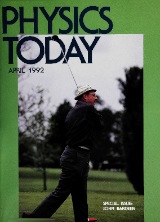
In preparing the talk I read the interesting articles in the April 1992 issue of Physics Today that was completely dedicated to Bardeen. In his article David Pines, says
[Bardeen's] approach to scientific problems went something like this: 
  • Focus first on the experimental results, by careful reading of the literature and personal contact with members of leading experimental groups. 
  • Develop a phenomenological description that ties the key experimental facts together. 
  • Avoid bringing along prior theoretical baggage, and do not insist that a phenomenological description map onto a particular theoretical model. Explore alternative physical pictures and mathematical descriptions without becoming wedded to a specific theoretical approach. 
  • Use thermodynamic and macroscopic arguments before proceeding to microscopic calculations. 
  • Focus on physical understanding, not mathematical elegance. Use the simplest possible mathematical descriptions. 
  • Keep up with new developments and techniques in theory, for one of these could prove useful for the problem at hand. 
  • Don't give up! Stay with the problem until it's solved. 
In summary, John believed in a bottom-up, experimentally based approach to doing physics, as distinguished from a top-down, model-driven approach. To put it another way, deciding on an appropriate model Hamiltonian was John's penultimate step in solving a problem, not his first.
With regard to "interesting stories or anecdotes about people, discoveries, and ideas relating to physics," what would you talk about?

Monday, December 5, 2016

Hydrogen bonding at Berkeley

On Friday I am giving a talk in the Chemistry Department at Berkeley.
Here is the current version of the slides.

There is some interesting local background history I will briefly mention in the talk. One of the first people to document correlations between different properties (e.g. bond lengths and vibrational frequencies) of diverse classes of H-bond complexes was George Pimentel. 
Many correlations were summarised in a classic book, "The Hydrogen Bond" published in 1960.
He also promoted the idea of a 4-electron, 3 orbital bond which has similarities to the diabatic state picture I am promoting.
There is even a lecture theatre on campus named after him!


Saturday, November 5, 2016

The role of simple models and concepts in computational materials science

Today I am giving the first talk in a session on Computational materials science at the 4th International Conference on Advances in Materials and Materials Processing.

Here are the slides for my talk "The role of simple models and concepts in computational materials science".

I will be referring the audience to the article such as those mentioned here, here and here that give a critical assessment of computer simulations and stress the importance of concepts.

I welcome comments, particularly as I think the talk could be stronger and clearer.

Thursday, November 3, 2016

Visit to a state university in India

Like everything in India, higher education is incredibly diverse, both in quality, resources, and culture. These statistics give some of the flavour. There are about 800 universities. A significant distinction is between state and central universities. The former are funded and controlled by state governments. The latter (and IITs, IISERs, IISc, TIFR...)  are funded and controlled by the central (i.e. national/federal) government. Broadly, the quality, resources, and autonomy (i.e. freedom from political interference) of the latter is much greater. On my many trips to India I have only visited these centrally funded institutes and universities.

This afternoon I looking forward to visiting the Physics Department of Vidyasagar University. It is funded by the West Bengal state government, and was started in 1981. It is named in honour of Ishwar Chandra Vidyasagar, a significant social reformer from the 19th century.

I am giving my talk on "Emergent Quantum Matter".
Here are the slides.

Update. I enjoyed my visit and interacting with the faculty and students. On the positive side, people were enthusiastic and there were some excellent questions from the students. I want to write a blog post about one question. On the negative side, it is sad to see how poorly places like this are resourced: whether infrastructure, lab equipment, lab supplies, library, faculty, or salaries. For example, there are 5 physics faculty members and they teach a full M.Sc. [2 years course work] to about 100 students. This is 2 courses per faculty per semester and obviously, their expertise is stretched to cover all courses. The Ph.D. students mostly have full-time jobs elsewhere and come in the afternoons and evenings to work on their projects. One travels 2 hours each way on public transport.

Wednesday, November 2, 2016

Hydrogen bonding talk at IIT-Kgp

Today I am giving a seminar, "Effect of quantum nuclear motion on hydrogen bonding" in the Chemistry Department at IIT Kharagpur. My host is Srabani Taraphder.

Here are the slides. The talk is mostly based on this paper.


Tuesday, November 1, 2016

Organic spin liquid talk at IIT-Kgp

Today I am giving a seminar in the Physics Department at Indian Institute of Technology (IIT) Kharagpur,
"Frustrated organic Mott insulators: from quantum spin liquids to superconductors."
Slides are here.

Due to the recent Nobel Prize to Haldane, I included one slide about quantum spin liquids in one dimension.

The talk material is covered in great detail in a review article, written together with Ben Powell.


What does this movie tell us about the modern university?

Last night, my wife and I watched the movie, Wit. You can watch the full movie here  (free with ads). I should warn that some of the conten...