Amelia Frank was a PhD student of John Van Vleck. Her work was cited by him in his 1977 Nobel Lecture. In the early days of quantum theory, she explained deviations of the magnetic moments of the rare earth ions Sm3+ and Eu3+ from Hund's rule predictions. Tragically, she died from cancer when she was only 31.
This past Monday, May 8, was a public holiday in Queensland, marking Labor Day. I don't know why we don't celebrate it on May 1, but that does not matter.
In honour of the event, I post two relevant resources. The first resource is a moving video by Sabine Hossenfelder, who has carved out a post-academic income as a populariser of physics. The video is funny and sad, describing her own experience in academia leading to "Death of a Dream".
Sabine has many poignant observations about the dysfunctionalities of physics in academia, from the personal to the intellectual.
I find it sad that people who leave academia because they could not find a permanent job see themselves as a "failure." First, most of the select few who get permanent jobs do so because they are at the right place at the right time, not because they are so much more brilliant and productive than others. Second, there is so much more to life than professional success. Finally, Sabine has been an incredible success. She has been able to popularise physics far beyond what has been achieved by others with big names and lots of resources. Furthermore, Sabine has made a significant contribution to the physics community by calling out hype and BS.
The second resource to mark Labor Day is an article,
It puts a specific (alarming) incident in the broader context of the history of how and why the governance and management of Australian universities have been captured by the ideology of neoliberalism. This has been facilitated by the opportunism and vanity of mediocre academics who become "managers" with million-dollar salaries.
A colleague suggested I might like Lessons in Chemistry, a novel by Bonnie Garmus. I have not read the book yet, but I have watched the first two episodes of the TV version on AppleTV. I watched the first episode for free.
The show contains a good mix of humour, love of science, and feminism. The chemistry dialogue seems to be correct. The show chronicles just how in the 1950s how awful life was for a young woman who aspired to be a scientist. Things have improved. But there is still a long way to go...
A major challenge for the social sciences is obtaining data that is reliable, gives significant insight, and could be used to test theories. Each week I read The Economist. Many of their articles feature graphs of social or economic data. To me, some of the graphs are just random noise or show marginal trends that I am not convinced are that significant. But other graphs are quite dramatic or insightful. Previously, I posted a famous one about smoking.
The data clearly shows the distressing fact that "The richest Black women have infant mortality rates at about the same level as the poorest white women."
The physics department at the University of Queensland has just advertised for a junior faculty position in condensed matter. Only applications from women will be considered. The advertisement is here and the closing date is January 19.
The photo is of the beach at Bribie Island, my favourite holiday location, about one hours drive away.
Aside: it was gratifying that the last faculty hired in condensed matter at UQ, Peter Jacobson, first heard about the position on this blog.
Every scientist is a person. They have a unique personality and a unique life story. Their family, friends, education, hopes, romances, cultural background, past disappointments have shaped who they are today. This past has had a significant influence on their current motivation, fears, ability to work with others, confidence, sense of identity, and manner of communication. It is important that we grapple with all this complexity if we are to appreciate and respect others, and to help them be successful. Graduate students are not slaves, robots, or all the same. Graduate students are people.
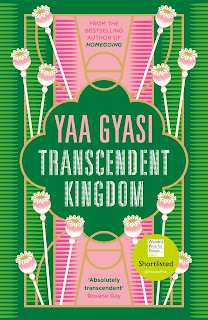
These complexities are too often overlooked. But we must engage them if we are to personally care for students and colleagues, and relate to them in a manner that helps them be successful. These issues were brought home to me recently reading the novel, Transcendent Kingdom by Yaa Gyasi. I thank my daughter for the gift, particularly as it was not the kind of book that I might normally have sought out.
The main character in the novel is Gifty, a graduate student in neuroscience at Stanford. Her parents immigrated to the U.S.A from Ghana and she grew up in Alabama, just like the author. Gifty's choice of research topic is motivated by her life experience including her brother's struggle with drug addiction. The research described in the novel is actually based on a real scientific paper written by a friend of the author.
Christina K. Kim, Li Ye, Joshua H. Jennings, Nandini Pichamoorthy, Daniel D. Tang, Ai-Chi W.Yoo, Charu Ramakrishnan, Karl Deisseroth
The novel gives an inside view of the life of a graduate student, describes experiments on mice, including the use of fluorescent proteins to image brain activity. Although science and graduate education is not the main point the novel, it may be good to give or recommend to non-scientists that you would like to understand a little of your world. The novel is easy to read and written in beautiful language. The main character (author) is an astute observer of herself, others, and social dynamics. The novel captures some of the intensity, independence, stubbornness, and introversion of a brilliant student.
The narrative naturally engages with a wide range of issues, including the immigrant experience and the associated prejudice, racism, poverty, dislocation, and alienation that are too often encountered. It considers family relationships, particularly the bond and tensions between a mother and an adult child. It gives a picture of what it may be like to be a young woman of colour in an elite institution. Then there is sexuality, white Pentecostal churches in the USA, science and religion, mental illness, drug addiction, a personal face on the opioid crisis, the philosophy of neuroscience, including the mind-brain problem,... This does seem like a long list of issues but the author manages to engage with them in a natural and meaningful way as part of a coherent narrative.
Perhaps the only criticism I might have is that I felt that the ending was a little too quick, neat, and may betray the complexity that the rest of the novel so beautifully captured.
Here are some other reviews and articles about the novel that I found most interesting. A review in the Washington post, A review in The New York Times, The back story of how a visit to a friends lab at Stanford led Gyasi to write the book.
My wife and I started watching the series The Chair, a comedy about an English department in an affluent liberal arts university in the Northeastern USA. We thought the first episode was a bit too soapy and stopped watching. But then, I read an article claiming that The Chair Is Netflix’s Best Drama in Years: "The near-perfect show elegantly skewers the subject of free speech on campus." So, we kept watching and were glad we did. But, I think it is really about much more than "free speech".
What I appreciate the most is that it brings out just how human (fallible, creative, caring, contradictory, selfish, egotistical, ridiculous, ...) all the players in the university are: students, faculty, administrators, families, ... There is much to laugh at, to groan about, and to celebrate. And, this is why we need the humanities.
For me, the best scene is the disciplinary hearing in the final episode. The embattled English department Chair says:
“Why should [students] trust us? The world is burning and we’re sitting up here worried about our endowment? Our latest ranking on U.S. News & World Report?”
One thing I think the series got badly wrong was how engaged the students were. They came to class, had done the required reading, asked questions, and were not on their phones! Oh, to teach a class in Hollywood!
If you have watched the series, what did you think?
My wife and I watched the movie, Radioactive, based on the life of Marie Sklodowska Curie. She was an amazing scientist who showed incredible perseverance, particularly in the face of discrimination by the scientific establishment in France at the beginning of the twentieth century, and attacks in the media because of her gender, nationality, and personal life.
The movie is good entertainment and creative, maybe a bit too creative at times. But they be a matter of personal taste. There were many things that I learnt, some substantial and others just interesting trivia, particularly after reading more on Wikipedia. Here are a few.
Curie did not only discover radioactivity, the elements radium and polonium (named after her native Poland), but also was the founder of nuclear medicine.
One can easily forget that more than a century ago, chemistry labs were very basic and that producing pure samples was a tedious process. For example, a tonne of pitchblende (uranium oxide ore) had to be crushed and processed to produce just one-tenth of a gram of radium chloride.
Back then the boundaries between physics and chemistry were fuzzy. Marie received a Nobel Prize in both. I wonder whether the legacy of joint chemistry-physics institutes in France was essential to de Gennes's work in soft matter.
Both Curie's started out in solid-state physics. Pierre Curie and his older brother discovered piezoelectricity. Pierre discovered the transition temperature for ferromagnetism (Curie temperature), and the Curie law for the temperature dependence of the magnetic susceptibility in a paramagnet. He followed his wife into nuclear research.
After her husband's tragic death, she had an affair with Paul Langevin and was vilified in the press.
A strong critique of the movie is by Geraldine McGinty. On the one hand, I agree with her concerns. On the other hand, I am just happy that "Hollywood" is exposing people to this extraordinary woman and her science. Maybe my hopes and expectations are just too low.
This relates to an ongoing debate about to what extent movies based on historical figures have to be historically accurate in every detail. The Crown (which I love) has brought these debates to the fore. Simon Jenkins states The Crown's fake history is as corrosive as fake news. Recent movies about scientists also raise the question to what extent the science must be absolutely accurate.
What do you think?
I welcome other comments on the movie, particularly from women.
The Kondo effect is a paradigm for quantum many-body physics. It has so much: non-perturbative effects, scaling, emergent energy scales, Bethe ansatz solution, asymptotic freedom, Fermi liquid, ...
The Kondo model is a benchmark for testing many approximations and numerical methods.
Furthermore, it connects to so many other things: Anderson single impurity model, Dynamical Mean-Field Theory, Kosterlitz-Thouless transition, heavy fermions, ...
Nevertheless, outside the strongly correlated electron community, it is not widely known, and particularly not in popular discussions of science.
I never thought it would feature at the beginning of the New York Times article, unless Jun Kondo (now 90 years old) was awarded a belated Nobel Prize.
I was pleasantly surprised to see a long profile of Myriam Sarachik that began with her experimental work on the Kondo effect back in 1963.
The article also chronicles some of the sexism she faced in her career and the very limited employment options there were for women in physics. The article also describes how she was not very "productive" for a decade due to recovering from the personal tragedy of the murder of her daughter. Yet, as her mental health recovered she made significant contributions: quantum tunneling in single molecule magnets and the metal-insulator transition in semiconductor heterostructures.
Last night I heard a model public lecture about science. The School of Mathematics and Physics at UQ hosted a public lecture at the Queensland State Library. Holly Krieger, a pure mathematician at Cambridge, spoke on the Mathematics of Life. This is part of a biannual lecture series endowed by Kurt Mahler.
The lecture was amazing, both in content and presentation. It was engaging for high school students, and stimulating for experts. I wish I had a video or a copy of the slides. Krieger is well known to some through her Numberphile videos on YouTube. Here are a few things I learned in the lecture.
Mathematics is the language of relationships and patterns.
We forget how even the concept of numbers is abstract. The notion of functions is even more so.
An underlying theme of the lecture was that of emergence: a simple rule describing the interactions between the components of a system lead to collective behaviour (complexity) of the whole system.
Examples were given from biological systems that raise the question: how does the system know to do this?
Swarms of starlings were shown in the short film, The art of flying by Jan van IJken.
How do they move in concert when there is no leader?
Other examples included ant bridges, an experiment with a slime mould that was able to replicate the Japanese transport network (here is the Canadian version), stripes and spots on animals (pattern formation explained with coupled reaction-diffusion equations by Alan Turing).
Rule 184 can describe traffic including jamming for medium traffic densities.
The occurrence of a traffic jam does not depend on the initial state or a particular car, but only depends on the density of cars and the interaction (rule) between cars.
That is just the first half of the lecture. I may blog later about the second half which concerned chaos, defined as small initial changes leading to significant changes in outcome.
One of the most interesting things for me about the lecture was Krieger's claim that "Emergent complexity isn't everywhere. It can be hard to detect or confirm.'' i.e., just because we see complex behaviour (patterns) does not mean that it is due to emergence. In question time she said that this was in response to some of Wolfram's grand claims in A New Kind of Science, along the lines that everything (consciousness, gravity, continuity, free will, ...) could be explained in terms of discrete computational models such as cellular automata.
I think a more nuanced view is necessary. I agree, along with many others, that Wolfram's grand claims are not justified. But, I do not equate emergent complexity solely with simple rule-based computational models such as cellular automata. Different people do define emergence differently. For example, Sophia Kivelson and Steve Kivelson propose the following definition.
An emergent behavior of a physical system is a qualitative property that can only occur in the limit that the number of microscopic constituents tends to infinity.
This would rule out classifying most of the phenomena described in the lecture as emergent. I disagree with this definition. On the other hand, I am not sure I agree with Krieger's claim. I do think almost anything interesting is emergent: consciousness, critical phenomena, the vacuum in quantum field theory, superconductivity, ...
I enjoyed watching the movie Hidden Figures. It is based on a book that recounts the little-known history of the contributions of three African-American women to NASA and the first manned space flights in the 1960s. The movie is quite entertaining and moving while raising significant issues about racism and sexism in science. I grimaced at some of the scenes. On the one hand, some would argue we have come a long way in fifty years. On the other hand, we should be concerned about how the rise of Trump will play out in science.
One minor question I have is how much of the math on the blackboards is realistic?
Each week I read The Economist. Many of their articles feature graphs of social or economic data. To me some of them are just random noise. But others are quite dramatic or insightful. Previously, I posted a famous one about smoking.
Below I show two graphs that I thought were quite useful about universities.
Aside: There are many personal dimensions to this gift choice. My sister-in-law and her family live in Corvallis, and their younger daughter attends Linus Pauling Middle School. Of course, they knew about my great admiration of Pauling. But also, the author has been in a book club with my sister-in-law.
I enjoyed reading the book and it gave me a different perspective on Pauling's life. Although, some of the more intimate details in the book I would rather not have known about...
The author nicely highlights how Ava Helen was really the driving force behind Linus' political activism, which ultimately led to his second Nobel Prize (in Peace) for the Partial Nuclear Test Ban Treaty. It is interesting to wonder whether today she would have shared the prize with him.
But, here I want to focus on two things that really struck me from the book.
In the 1950s Mrs. Pauling advocated two positions that we (or at least most people) just take for granted today. Yet at the time, the Paulings were persecuted for their advocacy of these views, particularly by powerful political, governmental, and commercial interests.
1. Above ground nuclear testing and the associated radiation exposure is bad for peoples health.
2. Faculty at public universities should be allowed to hold and advocate any political views they choose.
Today is Ada Lovelace day [I thank Ben Powell for bringing this to my attention] and so I asked myself, "Which woman has made the greatest contribution to quantum many-body theory?"
Maria Goeppert-Mayer is best known for receiving the Nobel Prize in Physics for her role in developing the nuclear shell model.
However, she did more. In 1938, together with Sklar, she did one of the first non -empirical quantum chemistry calculations: the excited states of benzene. This is in a widely cited Journal of Chemical Physics paper.