Showing posts with label superfluidity. Show all posts

Friday, July 24, 2026

Macroscopic quantum effects in superconductors and superfluids

Quantisation of magnetic flux in a superconductor

Magnets and electrical currents produce magnetic fields, regions of space where other magnets and electrical wires experience a mechanical force. For a circle of wire in the presence of a magnetic field the magnetic flux is defined as the strength of the magnetic field passing through the circle multiplied by the area of the circle. A law of electromagnetism states that if the field varies with time, then a voltage is produced in the wire with a magnitude that is proportional to the rate at which the magnetic flux through the circle changes. This is the physics behind all electrical motors and electrical generators. In the everyday world magnetic flux can have any value and can be varied continuously by changing the strength of magnetic field. In the quantum world that is not the case. Magnetic flux is quantised.

In 1961, two experimental groups independently reported the first observation of a macroscopic quantum effect, the quantisation of the magnetic flux passing through a superconducting cylinder (Figure 30). One team was Bascom Deaver and William Fairbank and the other Robert Doll and Martin Nabauer. A tall thin cylinder made of tin was placed in a magnetic field and cooled down to a low enough temperature that it entered the superconducting state. The magnetic flux passing through the cylinder was then measured as the magnetic field was varied. The resulting graph has four noteworthy features. First, there are clear steps, showing that the magnetic flux has discrete values. In contrast, in the normal metallic state the graph was a straight line. Secondly, the magnitude of the steps was the same, to within about one per cent, suggesting quantisation of a single unit of magnetic flux. Thirdly, the value of this quantum of magnetic flux was equal to the value of h/2e. Thus, it was completely determined by the two fundamental constants, h and e, Planck’s constant and the charge on an electron, respectively. And fourthly, graphs with the same three features noted above were later observed in other superconducting materials and cylinders. This showed that flux quantisation is independent of details such as the chemical composition and dimensions of the cylinder. This flux quantisation is a macroscopic quantum effect. It is macroscopic because the system is macroscopic, and the magnetic flux is a macroscopic property. It is quantum as and the magnitude of the quantisation is determined by Planck’s constant.


                                                                       (b)


Figure 30. Quantisation of magnetic flux in a superconducting cylinder. (a) A tall thin cylinder of tin was placed in a magnetic field. (b) The graph shows the value of the magnetic flux passing through the cylinder as the magnetic field was varied. Note the step like structure, showing quantisation of the flux.

The quantum of magnetic flux is denoted Φ0 (= h/2e) and has the value 2.067833848...×10−15   tesla (metre)2. This number also determines the scale of quantum interference effects between two superconductors, as we will see shortly. The flux quantum is also relevant to vortices that form when some superconductors are placed in a magnetic field (Figure 20). A persistent electrical current flows around the vortex and the magnetic field penetrates the core of the vortex. It can also be shown, both theoretically and experimentally, that the magnetic flux associated with each vortex is exactly equal to one quantum of flux. Something similar happens in superfluids.

Macroscopic quantum effects in superfluids

When a cylinder containing a fluid is rotated about an axis passing down the centre of the cylinder the fluid will also rotate. The faster the cylinder is rotated the faster the fluid rotates. A physical quantity known as the circulation is proportional to the speed of rotation and the diameter of the cylinder. With a variable speed motor, the rotation speed can be continuously varied and in normal fluids the circulation has continuous values. But not in a superfluid, as shown in a beautiful experiment done by W.F. Vinen in 1961 using liquid 4He. He observed that when the liquid was cooled below the superfluid transition temperature that the circulation could only take on discrete values. Furthermore, these discrete values are multiples of h/M where h is Planck’s constant and M is the mass of one atom of helium. This value was predicted by Lars Onsager in 1949 who identified h/M with the circulation of a single vortex in the superfluid. This is another macroscopic quantum effect.

The quantisation of magnetic flux in superconductors and of circulation in superfluids showed that both superconductors and superfluids can be classified as quantum states of matter. The close similarity of these quantum phenomena, even though superconductivity occurs in solids and superfluidity in liquids. This indicates a deep underlying unity, demonstrated through the study of condensed matter physics. 

This is an extract from Chapter 7, Quantum Matter, in Condensed Matter Physics: A Very Short Introduction.

Monday, July 6, 2026

What is a quasiparticle?

 An example of emergent entities in condensed matter physics are quasiparticles. The concept can be described with the following analogue. When a horse gallops through the desert it stirs up a dust cloud that travels with it. The motion of the horse cannot be separated from the accompanying dust cloud. They act as one entity. Similarly, in a system consisting of many interacting particles, when one particle moves it carries with it a “cloud” of other particles. This composite entity is referred to as a quasiparticle. It turns out to be easiest to understand the whole system of particles in terms of the quasiparticles rather than in terms of the individual particles.

Quasiparticles are composite objects. Like the constituent particles in the system, quasiparticles each have properties such as charge, mass, and spin. However, these properties of a single quasiparticle may be different from those of the individual particles of which it is constituted. An example is holes in semiconductors; the many electrons in a crystal act collectively to produce a hole (the absence of a single electron), a quasiparticle with the opposite charge to that of a single electron. A more striking example is for the fractional quantum Hall states; the charge of the quasiparticles can be a fraction of the charge on a single electron.

Different musical instruments produce distinct sounds because they are made of different materials, and they vibrate in different ways in response to different stimuli. In general, the vibrations of a medium reflect something about the medium itself. Chapter 3 discussed how in a crystal the number of distinct ways that sound can travel through a crystal reflects the symmetry and ordering of the atoms in the crystal.

When the skin on a drum is hit by a drumstick the skin vibrates at particular frequencies. Similarly, a state of matter responds to external stimuli such as light, sound or heat, by oscillating at particular frequencies. These vibrations travel through the matter as waves. The properties of these waves reflect the particular order present in the state of matter. Here is a specific example. When a neutron with a particular energy and momentum is absorbed by a ferromagnetic crystal the interaction of the magnetism of the neutron with that of the atoms in the crystal produces a collective oscillation of the magnetic state of the crystal in time and space. Known as a spin wave, this oscillation has a particular frequency and wavelength. In quantum theory, waves and particles are equivalent to one another. The energy and momentum of a particle are related to the waves’ frequency and wavelength, respectively. Particles equivalent to light waves are known as photons; particulate equivalents of sound waves are known as phonons. And similarly, the particle equivalent of a spin wave is known as a magnon. These collective excitations are quasiparticles. Whereas the particles in a system may interact strongly with one another, the quasiparticles may interact weakly with one another. This makes analysis and understanding of the relevant theories more tractable.

The quasiparticle concept is a powerful theoretical tool in condensed matter physics. It is the basis for the construction of models that enable emergent phenomena to be understood in terms of the effective interactions between components such as quasiparticles, rather than in terms of the actual constituent particles and their interactions. This approach requires profound physical insight in order to discern what the truly essential components of a system are. Lev Landau was one of the first theoretical physicists to take this approach, introducing the idea of quasiparticles in his theories of superfluidity in 4He and of liquid 3He. This approach was also central to the BCS theory of superconductivity. Phil Anderson was also a master of the approach, using intuition to propose models that were simple enough for analysis and yet complex enough to capture the essential physics associated with a particular state of matter. In 1977 he was awarded the Nobel Prize for work using this approach to understand two specific systems: magnetic atoms in metals and the motion of electrons in materials that are not crystals and are dirty in the sense of containing many impurities.

An extract from Chapter 9, "Emergence: More is Different", in Condensed Matter Physics, A Very Short Introduction

A more detailed and technical discussion is in Section 8.2 of my review article on emergence.

Sunday, March 15, 2026

Tony Leggett (1938-2026): condensed matter theorist

Tony Leggett died last week. The New York Times has a nice obituary. One measure of his influence on me is that more than 20 posts on this blog feature his work. He received the Nobel Prize in 2003 for developing the theory of superfluid 3He.

In 1972, a graduate student at Cornell, Doug Osheroff, discovered a phase transition around a temperature of 2 mK in liquid 3He. In the 1960s liquid 3He was established to be a Fermi liquid that was beautifully described by Landau's theory. Osheroff and his advisors, David Lee and Robert Richardson, incorrectly identified the phase transition as arising from antiferromagnetic order in the solid phase of 3He.

However, Leggett argued that it was actually due to superfluidity that there were two distinct superfluid phases, A and B, with different order parameters. 

Lee, Osheroff, and Richardson shared the Nobel Prize in 1996 for their discovery.

Leggett was primed to make rapid progress, as in 1965 and 1966 he had written three papers about superfluidity in liquid 3He, albeit assuming s-wave pairing. Indeed, by 1975 he wrote a comprehensive review article on the two superfluid phases.

For many reasons superfluid 3He was significant for the broader field of condensed matter. BCS showed that in elemental metals, superconductivity resulted from Cooper pairing of electrons due to an attractive electron-phonon interaction.  The order parameter (Cooper pair wave function) had s-wave spin singlet symmetry.

In contrast, superfluid 3He showed that Cooper pairing could also occur in a neutral Fermi liquid, and have non-trivial symmetry, i.e., p-wave symmetry and spin triplet. The order parameter has 18 components, compared to only 2 for elemental superconductors. There is spontaneous symmetry breaking of the local gauge symmetry, and spin or orbital rotational symmetries. 

The Cooper pairing in superfluid 3He is not due to a fermion-phonon interaction but due to spin fluctuations.

The fact that Cooper pairing was possible for different symmetries and mechanisms than for elemental superconductors was significant in that it meant it was reasonable to consider this possibility for superfluidity in neutron stars, and superconductivity in cuprates, strontium ruthenate, heavy fermions, and organic charge transfer salts.

There is rich physics associated with the symmetry breaking: 18 collective modes of the order parameter, textures such as boojums, and exotic vortex cores. For vortices, there is also some (controversial) connection to cosmic strings, including experiments that test the Kibble-Zurek mechanism and the electro-weak phase transition in the early universe.

Aside: My Ph.D. thesis was on the theory of the non-linear interaction of zero sound with the order parameter collective modes in the B-phase.

Leggett's development of the theory of superfluid 3He was amazing and certainly worthy of a Nobel. However, I think he made an even greater contribution to physics through his work on the theory of macroscopic quantum effects in Josephson junctions. This work was the basis for the experimental work that was honoured with the Nobel Prize last year.

With his student Amir Caldeira, Leggett performed concrete calculations of the effects of decoherence on quantum tunnelling in Josephson junctions.

[The NY Times obituary mistakenly says this work began after Leggett moved to Urbana. It was done while he was still at Sussex].

The formalism they developed involving the spectral density is the basis for most theoretical treatments of decoherence in superconducting qubits. A relevant toy model is the spin-boson model, and in 1987 Leggett published a seminal (but rather dense) review on the subject.

Leggett aided our understanding of cuprate superconductors. He contributed to the theoretical ideas that were the basis of the phase-sensitive measurements that established the d-wave nature of the order parameter. He also showed that experiments with inconsistent with  Anderson's interlayer tunneling theory.

I recommend reading Leggett's own scientific autobiography, Matchmaking Between Condensed Matter and Quantum Foundations, and Other Stories: My Six Decades in Physics and his book, The Problems of Physics

Wednesday, January 29, 2025

Emergence and continuous phase transitions in flatland

In two dimensions the phase transition that occurs for superfluids, superconductors, and planar classical magnets is qualitatively different from those which occur in higher  dimensions. Known as the Berezinskii-Kosterlitz-Thouless (BKT) transition, it involves several unique emergent phenomena. 

Novelty

The low-temperature state does not exhibit long-range-order or spontaneous symmetry breaking. Instead, the order parameter has power-law correlations, below a temperature T_BKT. Hence, it is qualitatively different from the high-temperature disordered state, which has correlations that decay exponentially. It is a distinct state of matter, with properties that are intermediate between the low- and high-temperature states normally associated with phase transitions. The power law correlations are similar to those at a conventional critical point, which decay in powers of the critical exponent eta. However, the BKT phase diagram can be viewed as having a line of critical points, consisting of all the temperatures below TBKT. Along this line, the critical exponent eta varies continuously with a value that depends on interaction strength. In contrast, at conventional critical points, eta has a fixed value determined by the universality class.

Sometimes it is stated that the low-temperature state has topological order, but I am not really sure what that means. Has this been made precise somewhere? 

The mechanism of the phase transition is qualitatively different from that for conventional phase transitions. It is driven by the unbinding of vortex and anti-vortex pairs by thermal fluctuations. In contrast, conventional phase transitions are driven by thermal fluctuations in the magnitude of the order parameter.

Discontinuity

There is a discontinuity in the stiffness of the order parameter at this transition temperature.

Unlike for conventional phase transitions the specific heat capacity is a continuous function of temperature. This is why the BKT transition is sometimes referred to as a continuous transition.

Toy model

A classical Heisenberg model for a planar spin, also known as the XY model, captures the essential physics.

Modularity at the mesoscale

The quasiparticles of the system that are relevant to understanding the transition are not magnons (for magnets) or phonons (for superfluids), but vortices, i.e., topological defects.  

These entities are usually on the mesoscale, i.e, there size is much larger than the lattice spacing. The relevant effective theory is not a non-linear sigma model. Thermal excitation of vortex-antivortex pairs determines the temperature dependence of physical properties and the transition at T_BKT.  There is an effective interaction between a vortex and an anti-vortex that is attractive and a logarithmic function of their spatial separation, analogous to a two-dimensional Coulomb gas. 

Universality

The BKT transition occurs in diverse two-dimensional models and materials including superfluids, superconductors, ferromagnets, arrays of Josephson junctions, and the Coulomb gas. The discontinuity in the order parameter stiffness at T_BKT has a universal value. 

The renormalisation group (RG) equations associated with the transition are the same as those of a multitude of other systems. The classical two-dimensional systems include the Coulomb gas, Villain model, Z_n model for large n, solid-on-solid model, eight vertex model, and the Ashkin-Teller model. They also apply to classical Ising chain with 1/r^2 interactions. Aside: Phil Anderson discovered these RG equations for the Ising chain before BKT derived their own equations.

Quantum models with the same RG equations include the anisotropic Kondo model, spin boson model, XXZ antiferromagnetic Heisenberg spin chain, and the sine-Gordon quantum field theory in 1+1 dimensions. In other words, all these models are in the same universality class.

Singularity

The correlation length of the order parameter is a non-analytic function of the temperature. 

This is related to the non-perturbative nature of the corresponding quantum models at their critical point. 

Personal aside: I first encountered this singularity (long ago) when working on a spin-Peierls model with quantum phonons.

Two-dimensional crystals

Similar physics is relevant to the solidification of two-dimensional liquids. However, the relevant toy model is not the classical XY model as one needs to include the effect of the discrete rotational symmetry of the lattice of the solid. The low-temperature state exhibits discrete rotational, but not spatial, symmetry breaking, with power-law spatial correlations. This state does not directly melt into a liquid, but into a distinct state of matter, the hexatic phase. It has short-range spatial order and quasi-long-range orientational (sixfold) order. The phase transitions are driven by topological defects, disclinations and dislocations.

Predictability

The BKLT transition, the quasi-ordered low-temperature state, and the hexatic phase were all predicted theoretically before they were observed experimentally. This is unusual for emergent phenomena but shows that unpredictability is not equivalent to novelty.

Wednesday, January 22, 2025

Quantum states of matter and metrology

Two characteristics of states of matter are associated with them being referred to as quantum. One characteristic is the importance of quantum statistics of particles, i.e., that the system is composed of particles that obey Fermi-Dirac or Bose-Einstein statistics. The second characteristic is that a macroscopic property is quantized with values determined by Planck’s constant. I now discuss each of these with respect to emergence.

Quantum statistics. 

For a system of non-interacting  fermions and bosons at high temperatures the properties of the system are those of a classical ideal gas. As the temperature decreases there is a smooth crossover to low-temperature properties that are qualitatively different for fermions, bosons, and classical particles. This crossover occurs around a temperature, known as the degeneracy temperature, that is dependent on the particle density and Planck’s constant. 

Many of the properties resulting from quantum statistics also occur in systems of strongly interacting particles and this is central to the concept of Landau’s Fermi liquid and viewing liquid 4He as a boson liquid. If liquid 3He and the electron liquid in elemental metals are viewed as a gas of non-interacting fermions, the degeneracy temperature is about 1 K and 1000 K, respectively. Thermodynamic properties are qualitatively different above and below the degeneracy temperature. Low-temperature properties can have values that differ by orders of magnitude from classical values and have a different temperature dependence. In contrast to a classical ideal gas, a fermion gas has a non-zero pressure at zero temperature and its magnitude is determined by Planck’s constant. This degeneracy pressure is responsible for the gravitational stability of white dwarf and neutron stars.  

These properties of systems of particles can be viewed as emergent properties, in the sense of novelty, as they are qualitatively different from high-temperature properties. However, they involve a crossover as a function of temperature and so are not associated with discontinuity. They also are not associated with unpredictability as they are straightforward to calculate from a knowledge of microscopic properties.

Quantised macroscopic properties.

These provide a more dramatic illustration of emergence. Here I consider four specific systems: superconducting cylinders, rotating superfluids, Josephson junctions, and the integer Quantum Hall effect. All of these systems have a macroscopic property that is observed to have the following features.

i. As an external parameter is varied the quantity varies in a step-like manner with discrete values on the steps. This is contrast to the smooth linear variation seen when the material is not condensed into the quantum state of matter.

ii. The value on the steps is an integer multiple of some specific parameter.

iii. This parameter (unit of quantisation) only depends on Planck’s constant h and other fundamental constants. 

iv. The unit of quantisation does not depend on details of the material, such as chemical composition, or details of the device, such as its geometrical dimensions.

v. The quantisation has been observed in diverse materials and devices.

vi. Explanation of the quantisation involves topology.

Superconducting cylinders. A hollow cylinder of a metal is placed in a magnetic field parallel to the axis of the cylinder. In the metallic state the magnetic flux enclosed by the cylinder increases linearly with the magnitude of the external magnetic field. In the superconducting state, the flux is quantized in units of the magnetic flux quantum, Φ0 = h/2e where e is the charge on an electron. It is also found that in a type II superconductor the vortices that occur in the presence of an external magnetic field enclose a magnetic flux equal to Φ0.  

Rotating superfluids. When a cylinder containing a normal fluid is rotated about an axis passing down the centre of the cylinder the fluid rotates with a circulation proportional to the speed of rotation and the diameter of the cylinder. In contrast, in a superfluid, as the speed of rotation is varied the circulation is quantised in units of h/M where M is the mass of one atom in the fluid. This quantity is also the circulation around a single vortex in the superfluid. 

Josephson junctions. In the metallic state the current passing through a junction increases linearly with the voltage applied across the junction. In the superconducting state the AC Josephson effect occurs. If a beam of microwaves of constant frequency is incident on the junction, jumps occur in the current when the voltage is an integer multiple of h/2e. The quantisation is observed to better than one part in a million (ppm).

Integer Quantum Hall effect. In a normal conductor the Hall resistance increases linearly with the external magnetic field for small magnetic fields. In contrast, in a two-dimensional conductor at high magnetic fields the Hall resistance is quantized in units of h/2e^2. The quantisation is observed to better than one part in ten million. Reflecting universality, the observed value of the Hall resistance for each of the plateaus is independent of many details, including the temperature, the amount of disorder in the material, the chemical composition of system (silicon versus gallium arsenide), or whether the charge carriers are electrons or holes.

Other examples of macroscopic quantum effects are seen in SQUIDs (Superconducting Quantum Interference Devices). They exhibit quantum interference phenomena analogous to the double-slit experiment. The electrical current passing through the SQUID has a periodicity defined by the ratio of the magnetic flux inside the current loop of the SQUID and the quantum of magnetic flux.

The precision of the quantisation provides a means to accurately determine fundamental constants. Indeed, the title of the paper announcing the discovery of the integer quantum Hall effect was, “New Method for High-Accuracy Determination of the Fine-Structure Constant Based on Quantized Hall Resistance.” It is astonishing that a macroscopic measurement of a property of a macroscopic system, such as the electrical resistance, can determine fundamental constants that are normally associated with the microscale and properties of atomic systems. 

Laughlin and Pines claimed that the quantisation phenomena described above reflect organizing principles associated with emergent phenomena, and their universality supports their claim of the unpredictability of emergent properties. 

Quantum states of matter and metrology

The universality of these macroscopic quantum effects has practical applications in metrology, the study of measurement and the associated units and standards. In 1990 new international standards were defined for the units of voltage and electrical resistance, based on the quantum Hall effect and the AC Josephson effect, respectively.

Prior to 1990 the standard used to define one volt was based on a particular type of electrical battery, known as a Weston cell. The new standard using the AC Josephson effect allowed voltages to be defined with a precision of better than one part per billion. This change was motivated not only by improved precision, but also improved portability, reproducibility, and flexibility. The old voltage standard involved a specific material and device and required making duplicate copies of the standard Weston cell. In contrast, the Josephson voltage standard is independent of the specific materials used and the details of the device. 

Prior to 1990 the international standard for the ohm was defined by the electrical resistance of a column of liquid mercury with constant cross-sectional area, 106.3 cm long, a mass of 14.4521 grams and a temperature 0 °C. Like the Josephson voltage standard, the quantum Hall resistance standard has the advantage of precision, portability, reliability, reproducibility, and independence of platform. The independence of the new voltage and resistance standards from the platform used reflects the fact that the Josephson and quantum Hall effects have the universality characteristic of emergent phenomena.

This post is an adaptation of material in Condensed Matter Physics: A Very Short Introduction

Friday, October 15, 2021

Why are superfluids creepy?

 A signature effect associated with superfluidity in liquid helium is that it can climb up the walls of a container and empty the container. This is seen in the video below (beginning at 1:10).


But what is the physics behind this? 
Why is this a signature of superfluidity?


The schematic below is helpful. [It is figure 1.8 in Superfluidity and Superconductivity by Tilley and Tilley.]
We need to distinguish between which parts of the underlying physics occur for all fluids and which only occur for a superfluid.

1. For any liquid in thermodynamic equilibrium inside a container there is some vapour present. Some of this vapour condenses onto the surface of the container, forming a thin film of liquid on the surface. The surface of the liquid is actually not completely flat but curves upwards at the edge of the container surface. An example of this is a concave meniscus that one sees inside a small tube.

2. For a normal fluid the surface film is relatively thin and is pinned to the container surface by the viscosity of the fluid.

3. In superfluid helium the film is thick enough that the superfluid component of the fluid can flow freely. The film also extends to the top of the container walls.
Thus, the superfluid forms a continuous film that extends up and over the container walls. 

4. Superfluid in the film can flow freely if there is a driving force. The difference in gravitational potential energy between the surfaces of the liquid inside and outside the container provides such a driving force. The physics of this is identical to that of a regular siphon. It is just that in the case of superfluid helium the "tube" is the surface film and that due to superfluidity this film can flow.

And so, that is why superfluids are creepy.

Thursday, April 15, 2021

Fifty years ago: three big discoveries in condensed matter

For the marketing plan for my Very Short Introduction, I was recently asked whether there were any significant anniversaries happening in condensed matter physics (and associated conferences). This is not something I normally think about.

I realised that fifty years ago there were three big discoveries. All eventually led to Nobel Prizes. Each discovery had a profound effect on the formation of condensed matter as a distinct discipline built around a few unifying concepts. At the time the discoveries and ideas appeared quite independent, but there are deep connections between them.

Renormalisation group and critical phenomena

In 1971 Ken Wilson published two papers  [PRB 4, 3174, and PRB 4, 3184] laying the foundations, followed by two PRLs in 1972, including one with the provocative title, Critical Exponents in 3.99 Dimensions

Wilson received the Nobel Prize in 1982. This work had many implications and applications. 

Explained universality in critical phenomena.

Highlighted how spatial dimensionality changes physics.

Illustrates why effective Hamiltonians work (so well).

Showed the power of quantum field theory techniques.

Defined concepts of scaling and fixed points.

Superfluidity in liquid 3He

In 1972,  Osheroff, Richardson, and Lee reported new phase transitions in liquid/solid 3He. Tony Leggett identified these transitions as due a superfluid phases and also identified the order parameters. The experimentalists shared the Nobel Prize in 1996 and Leggett in 2003. The discovery was significant for many reasons, beyond just being a new state of matter.

It provided a rich example of a state of matter with multiple broken symmetries. The order parameter has eighteen components, which can be viewed as a combined superfluid, ferromagnet, and liquid crystal.

The rich order parameter led to an exploration of diverse topological defects, from superfluid vortices with magnetic cores to boojums. This highlighted the concepts of broken symmetry, rigidity, and topological defects.

This was the first example of an unconventional fermionic superfluid. Specifically, it could be described by BCS theory, but not with s-wave pairing nor with the pairing mechanism of the electron-phonon interaction in elemental superconductors. This showed the adaptability of BCS theory. It laid the groundwork for understanding unconventional superconductivity in heavy fermions, organics, and cuprates.

Berezinskii-Kosterlitz-Thouless phase transitions

In Berezinskii published papers in 1970 and 1971, and Kosterlitz and Thouless published papers in 1972 and 1973. This work was significant for reasons including the following.

It showed states of matter and phase transitions were qualitatively different in two and three dimensions.

New concepts such as topological order, quasi-long-range order, essential singularities, and defect-mediated phase transitions were introduced.

Like that of Wilson, this work highlighted universality. There were connections between superfluids, superconductors, and XY magnets.

Scaling equations provided insight.

Kosterlitz and Thouless were awarded the Nobel Prize in 2016

We should celebrate!

Wow! Quite the Golden Jubilee!

Does anyone know of any conferences, events, or books that are planned to mark these anniversaries?

Tuesday, November 10, 2020

Kapitsa, Landau, and quasi-particles

Earlier I suggested that the founders of condensed matter physics were Onnes, Landau, Bardeen, Anderson, and Wilson. I might also add Brian Josephson. But, as pointed out by Ben Powell, this list is theory-centric and so I am thinking more about experimentalists. I think my first addition would be Pyotr Kapitsa. He received a Nobel Prize for "his basic inventions and discoveries in the areas of low-temperature physics" and he managed to save Landau from the Soviet gulag. However, there is a lot more to Kapitsa. Two particular experimental achievements were finding ways to produce large quantities of liquid helium and the production of high magnetic fields. Both of these were key for revealing the details of the Fermi surface of metals through quantum magnetic oscillations and ultimately for finding new states of matter (such as superfluidity) and mapping out phase diagrams.

I was wondering how influential Kapitsa was in influencing Landau's scientific thinking. Biographical Memoirs of Fellows of the Royal Society has obituaries of Landau written by Kapitsa and by Evgeny Lifshitz. Kapitsa's is fairly boring, almost reading like something written by a Soviet bureaucrat, noting "The only interruption in his work at the Institute occurred between 1938 and 1939". No mention is made is that this was because he was in prison for mocking Stalin! Although the following is worth noting: 
 To what extent Landau valued ... connexion with experiment is revealed by the following. His theoretical department at the Institute was small (there were no more than ten research workers and aspirants). Although I suggested that the Academy might set up a special Institute of Theoretical Physics on as large a scale as he wished, Landau not only declined, but even refused to discuss the matter. He said that size was not important and he was extremely happy to be classed as a staff member of the experi mental institute.
It is also interesting that Landau never read any scientific literature himself, and never wrote anything!


Lifshitz's obituary is more detailed and focuses on Landau's science, rather than just reciting his CV. The following shows just how important Kapitsa was for Landau scientifically. Lifshitz states
But Landau’s greatest contribution to physics was the theory of quantum liquids. Its significance continues to increase and undoubtedly during recent decades it has also had a revolutionary effect on other fields of physics— solid state and even nuclear physics. 

The theory of superfluidity was stated by Landau in 1940-41 soon after the discovery in 1937 by P. L. Kapitza of this basic property of helium-II....

The discovery and explanation of superfluidity is also remarkable for its truly constructive interaction between experiment and theory. The research of Kapitza and Landau was carried out in close scientific co-operation and there is no doubt that results of the wide experimental research into processes of heat transfer in liquid helium carried out by Kapitza in 1939-41, had a stimulating effect on theoretical constructions. For his part, Landau formulated his theories while these experiments were still in progress, which made it possible to interpret the results of new experiments immediately. 

The basis of Landau’s theory is the notion of ‘quasi-particles’ (elementary excitations) which compose the energy spectrum of liquid helium. Landau was the first to put the question of the energy spectrum of a macroscopic body in this most general form, and he also found the character of the spectrum for a quantum liquid of the type to which liquid helium (the 4He isotope) belongs;

The concept of quasi-particles is arguably one of the most important in quantum many-body theory and condensed matter.

Aside: I had forgotten this and tended to think quasi-particles were introduced by Landau in his Fermi liquid theory paper fifteen years later.

The comments above follow the common narrative of the discovery of superfluidity, which as Sebastien Balibar argues is debatable. This narrative exclusively focuses on Kapitsa and Landau. The new state of matter, Helium-II, associated with a singularity in the specific heat of liquid 4He at the lambda temperature, was discovered in 1927 by Willem Keesom in Leiden. Superfluidity was independently discovered in 1937 by Allen and Misener. Theories of superfluidity, including the two-fluid model, by Laszlo Tisza and Fritz London, were developed before Landau's.

Nevertheless, the main point remains clear. It is highly likely that Landau and Kapitsa had a significant influence on one another. Such synergy between experiment and theory is at the heart of condensed matter physics. Kapitsa was definitely following the integrated approach of Kammerlingh Onnes: development of experimental techniques, careful measurements, addressing fundamental questions, and interaction with theorists.

Tuesday, August 18, 2020

Quantum matters for the public

I have now finished my first draft of  Chapter 7 of Condensed Matter Physics: A Very Short Introduction. The main purpose of the chapter is to introduce quantum states of matter. It is arguably the most challenging of the chapters to write and to understand. But, it is potentially the most fascinating.

I welcome comments and suggestions. However, bear in mind that my target audience is not the typical reader of this blog, but rather your non-physicist friends and family.

I think it still needs a lot of work, particularly to be less technical. For example, I should probably drop Aharonov Bohm ...

The goal is for the chapter to be interesting, accessible, and bring out the excitement and importance of condensed matter physics.

Thursday, May 14, 2020

Adventures in Flatland

I have now finished my first draft of chapter 5, of Condensed Matter Physics: A Very Short Introduction. The main purpose of the chapter is to introduce the idea of spatial dimensionality.

 I welcome comments and suggestions. However, bear in mind that my target audience is not the typical reader of this blog, but rather your non-physicist friends and family.

I think it still needs a lot of work, particularly to be less technical. I still have not figured out how to explain how fluctuations are larger in lower dimensions.

The goal is for it to be interesting, accessible, and bring out the excitement and importance of condensed matter physics.


Tuesday, April 14, 2020

Phil Anderson (1923-2020): theoretical physicist extraordinaire

Phil Anderson died two weeks ago. There have been many obituaries, including at The New York Times, Not Even Wrong (Peter Woit), and Nanoscale Views (Doug Natelson). Few would argue that he was the greatest condensed matter theorist of the second half of the twentieth century. I would go further and suggest that he and Ken Wilson were the greatest theoretical physicists of the second half of the twentieth century. Anderson's scientific legacy extends far beyond condensed matter physics.

More than sixty posts on this blog include ``P.W. Anderson'' in the label. There is no doubt that Anderson is the largest intellectual influence on this blog.

Phil Anderson made incredibly diverse and valuable contributions to condensed matter physics (anti-ferromagnetism, localisation, weak localisation, magnetic impurities in metals, Kondo problem, poor mans scaling, superfluid 3He, spin liquids, RVB theory of superconductivity... ).

It is noteworthy that Anderson applied scaling to condensed matter before Wilson. In the late 1960s he wrote a series of papers on ``poor man's scaling" for the Kondo problem.

I can think of several significant and profound influences of Phil beyond condensed matter physics.

1. Codifying and elucidating the concept of emergence (and the limitations of reductionism) in all of science, in More is Different in 1972.
[Although it should be acknowledged that the word ``emergence'' does not appear in the article and that Michael Polanyi developed similar ideas about emergence earlier.]

2. Nambu referenced several papers by Anderson about superconductivity in his seminal papers on the mass of elementary particles and symmetry breaking.

3. Laying the groundwork for the Higgs boson in 1963 by connecting spontaneous gauge symmetry breaking and mass. 

4. Elucidating spin glasses in a way that was key to John Hopfield's development of a particular neural network and to the notion of a "rugged landscape", relevant in protein folding and evolution. Anderson described these connections nicely in two pages in Physics Today in 1990.

Phil had a significant influence on my own job/career trajectory. For my Princeton Ph.D. I worked with Jim Sauls on superfluid 3He, which Phil supported financially. He was on the committee for my Ph.D. thesis defense in 1988. In 1993, towards the end of a postdoc, my job prospects were extremely slim. Phil told me that he had been asked to review an application I made for a five-year research fellowship back in Australia. My success was probably based on a positive review from Phil. I regret that during my time as a graduate student I did not have the confidence to interact much with him. However, from about 1995 to 2002, I made a visit to Princeton practically every year and had some nice discussions with him. It was also fascinating to see the close personal and scientific relationship that Phil and N.P. Ong had; it was clearly mutually very beneficial.
One cryptic comment: ``look at the metal-insulator-metal tunneling theory from the 1960s" [I found Mahan has a nice discussion] set me on the right path to do the calculations in this paper, about angle-dependent-magnetoresistance oscillations in layered metals.


I highly recommend the Anderson anthologies (reprint collections), listed below in order of increasing technical difficulty.

More and Different: notes from a thoughtful curmudgeon.
It is a collection of essays on wide-ranging subjects: personal reminiscences, history, philosophy, sociology, science wars, ...
Some of these have been published before but many have not.

A Career in Theoretical Physics
Something amazing about this collection of papers is what is not in it; e.g. his papers on superfluid 3He with Brinkman, or on charge ordering and antiferromagnetism in ferrites.

Basic Notions of Condensed Matter Physics

Andrew Zangwill is working on a scientific biography of Phil Anderson. I am looking forward to reading.

Wednesday, February 26, 2020

The order of things

I have now finished my first draft of chapter 4, of Condensed Matter Physics: A Very Short Introduction. The main purpose of the chapter is to introduce the idea and significance of the order parameter.

 I welcome comments and suggestions. However, bear in mind that my target audience is not the typical reader of this blog, but rather your non-physicist friends and family.

I think it still needs a lot of work. I may split this chapter into two.

The goal is for it to be interesting, accessible, and bring out the excitement and importance of condensed matter physics.

Saturday, February 22, 2020

Completing the square

When studying quantum many-body theory, sometimes one gets lost in all the indices, functional integrals, Feynman diagrams, ...
Then one can lose sight of the fact that some techniques are really just the same as in simple mathematics. Examples include the method of steepest descent and cumulant expansions.

In basic algebra, a simple exercise is to complete the square in a quadratic equation, i.e. to make use of the following identity.


Suppose one has the following Hamiltonian. If describes a field q that couples linearly to a different field s, with a coupling constant s.
 Now if we complete the square and do a displacement of the field q we are left with the new Hamiltonian.
This now describes a free field q (i.e. non-interacting) and there is an attractive self-interaction of the field s with coupling constant a^2.

A related example is the Hubbard-Stratonovich_transformation. This allows one to introduce a new field that couples to the original field and then ``integrate out" the original field to leave a new interacting field theory. Two important and related examples are the following.

1. The Ising model is equivalent to a Landau theory for a scalar field (order parameter) and so they are in the same universality class. There is a nice treatment of this in Negele and Orland

2. Introduction of a superconducting order parameter to describe a fermion system with an attractive four-fermion interaction in the Cooper channel. There is a natural generalisation to superfluid 3He. I first encountered this approach in a book by Popov.

Thursday, January 9, 2020

The central role of scales in condensed matter

An important concept in condensed matter is the role played by scales, i.e. how big or small physical quantities are. Length, time, energy, and temperature are all physical quantities.

For example, there are many different length scales associated with a piece of material, say a block of copper, ranging from centimetres to a fraction of a nanometer. This covers lengths varying by a factor of a trillion, i.e., twelve orders of magnitude. The piece of copper may have dimensions of a centimetre. But it may be composed of small metallic grains of micron (micrometer) dimensions, and that can only be seen with a microscope. On an even smaller scale is the size of the individual copper atoms that make up the material, with dimensions less than a nanometer. Using different experimental techniques a scientist can ``zoom in and out'' and examine the properties of a material at different length scales.

Similarily one can investigate properties of a material at different time scales. This is similar to how one may use a high-speed movie camera to observe something and then replay it in slow motion. In a metal there are different time scales associated with different phenomena: the vibration of an atom, the time between collisions of electrons with each other, the period of the collective oscillation of all of the electrons.

There are also different energy scales associated with a material. Examples include the energy required to move a single atom a particular distance, the energy required to remove a single electron from the crystal, the kinetic energy of an electron inside the material, and the energy required to compress the whole material by a certain amount.

In quantum theory, energy and time are related by a proportionality factor known as Planck's constant. Thus, the energy scale and time scale associated with a specific phenomenon are related to each other.

The magnitude or scale of the temperature is also important. Temperature is related to energy via heat. Using clever refrigeration techniques materials can be cooled down to temperatures of less than one-thousands of a degree above absolute zero. This means that the properties of a material can be studied over a temperature range varying by about a factor of one million (six orders of magnitude).

This wide range of length, time, energy, and temperature scales is central for condensed matter physics in several respects. Overall, it means that phenomena, experimental techniques, theories, and concepts are relevant to a particular scale.

Experimental techniques have to be designed to investigate and ``probe'' the relevant phenomena at the relevant scale. Theories are also constructed with a concern with the relevant scales. Perhaps this is obvious.

There are also three profound and unanticipated aspects of the role of scales in condensed matter. 

a. Whereas, the existence of the atomic and macroscopic scales is obvious, due to collective behaviour (emergence) there are intermediate scales of length and time associated with particular phenomena. Before, I have discussed examples of emergent energy scales and length scales.

b. In distinct systems, the same phenomena can occur at scales that differ by many orders of magnitude. A striking example is the occurrence of superfluidity in liquid 3He at temperatures below one-thousandth of a one degree Kelvin and in neutron stars at temperatures below one hundred thousand degrees.

c. Through a highly sophisticated theoretical method, known as the renormalisation group and scaling, it is possible to make concrete connections between the properties of a system at different scales.

It is worth considering whether this wide range of scales and the central role they play occurs in other academic disciplines. In biology, this is certainly true, with a hierarchy of scales from biomolecules to protein networks to cells to organs. In economics, one goes from individual consumers to microeconomics to macroeconomics. The size of personal incomes, businesses, and government debt can also range of many orders of magnitude. In sociology, there is also a range of scales. Indeed, emergence does shape many of the big questions of many disciplines.
Arguably, what is really unique about CMP is b. and c. above.

I thank my son for asking me to clarify this central role of scales in condensed matter.

Wednesday, August 15, 2018

Solid State or Condensed Matter Physics?

The two terms are often used interchangeably, but that is not appropriate. Condensed matter physics does not just involve solids but also phenomena in liquids, liquid crystals, superfluids, and polymer melts.  Solid state physics is a subset of condensed matter physics. The latter term was arguably coined by Phil Anderson, when he and Mott renamed their research group at Cambridge in the 1970s. One can view research fields or course titles as a list of topics or as a way of thinking about certain parts of reality. Solids exhibit rich phenomena including magnetism and superconductivity. However, it is best to actually view the solids as (an almost irrelevant) substrate for the phenomena.

Like many things, this perspective arguably started with Landau. His theory of phase transitions in the 1930s did not consider atomic structure or chemical composition. Even structural phase transitions were viewed in terms of symmetry change, not in terms of explicit microscopic details. In 1950 this led to the Ginzburg-Landau theory of superconductivity. This all suggested a unified approach to phase transitions.
Furthermore, Landau's Fermi liquid theory papers were originally concerned with understanding liquid 3He, not electrons in metallic crystals.

This idea was further highlighted in the 1970s with the study of critical phenomena and the associated idea of universality. Specifically, the critical behaviour of an XY magnet, a superconductor, and a superfluid, are the same (i.e. they have the same critical exponents). The critical behaviour of the liquid-gas transition, an Ising magnet, and the order-disorder transition in a binary alloy are the same. The view that the solid state might actually not be the key feature for understanding and describing superconductivity was highlighted in the 1950s by Fritz London in his two-volume book, Superfluids, which suggested the two phenomena were intimately connected. Beginning in 1968, De Gennes took a condensed matter perspective in applying order parameters and scaling ideas to “soft matter”: liquid crystals, polymers, wetting, …

The important element to this conceptual view of condensed matter is that it provides a unifying perspective on phenomena in a diverse range of materials. It also brings to the fore how a wide suite of powerful theoretical and experimental tools (esp. neutron and x-ray scattering) can be used to study diverse materials. One of the key theoretical strategies is that of effective Hamiltonians, which is not unique to condensed matter, because it just reflects the hierarchy of energy, length, and times scales that result from emergence. This then leads to an intellectually rich interchange of ideas and techniques from other fields of physics, particularly quantum field theory.

More recently, this unity is illustrated by ultracold atomic gases which can be used to study some phenomena that had previously only been studied in solids.

Wednesday, March 14, 2018

"Bad fluids" near the superfluid transition

There is an interesting preprint
Viscosity Bound Violation in Viscoelastic Fermi Liquids 
 Matthew P. Gochan, Hua Li, Kevin S. Bedell

They consider the unitary Fermi gas within the framework of Fermi liquid theory. This system undergoes a superfluid transition at a temperature of about 0.17 times T_F (the Fermi temperature). They calculate the shear viscosity as a function of temperature. (I think) the complete temperature dependence is obtained by interpolating between the low-temperature and high-temperature limits.

The motivation for the study is the conjectured universal bound for the ratio of the shear viscosity to the entropy density, based on the AdS-CFT conjecture, beloved by string theorists.

The authors find that the conjectured bound is violated because the viscosity can become arbitrarily small near the superfluid transition due to large scattering from superfluid fluctuations. This is because the mean free path becomes arbitrarily small, i.e. the system is similar to a bad metal.
Unfortunately, the preprint does not reference some earlier relevant work on the shear viscosity of the unitary Fermi gas or on the bad metal near a Mott transition.

I thank Alejandro Mezio for bringing the preprint to my attention.

Thursday, June 8, 2017

A lucid lecture on the last 50 years of superconductivity

At the weekly condensed matter theory cake meeting today we watched a video of a KITP blackboard talk given by Piers Coleman in 2015.
Superconducting Surprises: five decades of discovery, in both temperature and time!

It is a very nice exposition of the history and some of the key physics.

A couple of minor comments.

Organic superconductors were discovered in 1980 not 1973.

Piers claims that the difference between the thermodynamic entropy of the superconducting and metallic states (determined from integrating the temperature dependent specific heat) is related to the quantum entanglement entropy of the superconducting ground state.
The relationship between entanglement entropy (defined on a pure quantum state (at zero temperature) which is divided in two) and thermal entropies (defined for a bulk system in a mixed state at finite temperature) is an incredibly subtle and complex issue that I don't think is resolved. See for example the discussion in this paper.

Wednesday, October 12, 2016

A quantum dimension to the Kosterlitz-Thouless transition

In my previous post about the 2016 Nobel Prize in Physics I stated that the Kosterlitz-Thouless transition was a classical phase transition (involving topological objects = vortices), in contrast to the quantum phase transitions associated with topological phases of matter.

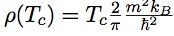
However, on reflection I realised that it should not be overlooked that there is something distinctly quantum about the KT transition. In a two-dimensional superfluid it involves the binding of pairs of vortices and anti-vortices. These each have a quantum of circulation (+/-h/m where h is Planck's constant and m is the particle mass).

At the KT transition temperature Tc there is a finite jump in the superfluid density rho. The value just below Tc is related to Tc by


Note that Planck's constant appears in this equation.
In a classical world (h=0), Tc would be zero and there would be no KT transition!

This universal relation was derived by Nelson and Kosterlitz in 1977

The figure below contains a range of experimental data testing this relation.

What does this movie tell us about the modern university?

Last night, my wife and I watched the movie, Wit. You can watch the full movie here  (free with ads). I should warn that some of the conten...