Showing posts with label QMBT reading group. Show all posts

Friday, February 24, 2017

Excellent notes on the Quantum Hall Effect

In the condensed matter theory group at UQ we regularly run reading groups, where we work through a book, review article, or some lecture notes. This is particularly important as our PhD students don't take any courses.

Currently we are working through some nice lecture notes on the Quantum Hall effect, written by David Tong. They are very accessible and clear, particularly in putting the QHE in the context of topology, edge states, Berry's phase, Chern insulators, TKNN, ...

On his website he also has lectures on a wide range of topics from kinetic theory to string theory.

Monday, July 9, 2012

Books on quantum many-body theory

Previously at UQ we have run a few successful book reading groups for postdocs and graduate students. We have worked through parts of
Electronic Correlations in Molecules, and Solids by Peter Fulde
Advanced Solid State Physics by Phillip Philips
A Chemists Guide to Valence Bond Theory by Shaik and Hiberty

A postdoc, Tony Wright, and I are considering starting a new group based on a book on quantum many-body theory. We want a book that makes a strong connection to experiment. I welcome suggestions.

Here is my current suggestions in order of roughly decreasing preference

The Kondo Problem to Heavy Fermions by Alex Hewson.
Although focussed on the Kondo problem, it covers techniques and concepts that are more broadly applicable including Fermi liquid theory, scaling, and slave bosons.
It does connect strongly to experiment.
The e-book is available through the library.

An introduction to Many-Body Theory by Piers Coleman.
This is particularly clear, emphasizes key concepts, and has beautiful illuminating illustrations. But, perhaps we want more connection to experiment.
Available free on-line.

Many-Body Quantum Theory in Condensed Matter Physics by Henrik Bruus and Karsten Flensberg.
No path integrals. Too many Feynman diagrams? Again, perhaps we want more connection to experiment.
Multiple copies are available in the library.

Tuesday, August 10, 2010

Perturbation theory is boring (and misleading)


Ten years ago Phil Anderson wrote a really stimulating "Reference Frame" article, Brainwashed by Feynman? in Physics Today.
Anderson gives several concrete examples to stress the importance of non-perturbative effects in quantum many-body theory, whether it is the standard model of particle physics or molecular bonding. Bound states are a prime example of a non-perturbative effect. He also mentions the highly non-trivial (and counter-intuitive) case of the chiral anomaly where the whole Fermi sea matters. Anderson cites Roman Jackiw's Dirac Prize lecture as a beautiful exposition of the relevant physics.

As an aside I think the title is a bit unfair to Feynman. Feynman would have been the last person to "brainwash" anyone and he certainly appreciated the importance of non-perturbative effects. The problem is really people who are enamoured by the success of Feynman diagrams (in their appropriate context) and then apply the formalism when one can't necessarily expect it to work.

I thank Seth Olsen for bringing this article to my attention.

Sunday, August 8, 2010

Excellent text on chemical physics

I just bought a copy of Quantum mechanics in chemistry by George Schatz and Mark Ratner (the Dover edition is only US$17 at Amazon).
I wish I had bought a copy years ago. I knew of the books existence but assumed it was just another introductory book on quantum chemistry. However, the book is very different. There is significant focus on dynamics, condensed phase effects, and density matrices. Second quantisation is used extensively [something many theoretical chemists are not comfortable with but physicists are]. Much of the material is things the last few years I have struggled to learn myself or find where it is clearly written down. It has nice problems and chemical applications.

Thursday, June 10, 2010

Basics of organic photonics

Today I am giving the "cake meeting" talk. I will mostly go through some key ideas about excited states of organic molecules, that I mentioned in the previous post.

The figure below nicely illustrates a few key ideas.
It shows the absorption and emission spectrum of anthracene.
The high energy feature is associated with the lowest "bright" singlet state.
The low energy feature is associated with the lowest triplet state.

Note
  • the vibrational satellites (these are mostly aromatic C-C stretches)
  • the "mirror-image" symmetry of the absorption and emission spectrum.
  • the singlet absorption is 8 orders of magnitude larger than the triplet
  • the large singlet-triplet energy gap
I will then flag how the full machinery of quantum many-body theory can attack some (but far from all) of these issues: vibronic structure, mirror-image rule, Huang-Rhys factor, Stokes shifts....
The relevant formalism is contained in a section of Mahan's tome, Many-Particle Physics. It allows one to treat many-modes, temperature dependence, and strong coupling, ...

Saturday, May 29, 2010

Student problem set in quantum many-body theory

Learning basic concepts in quantum many-body theory and starting to do actual calculations is not easy. Furthermore, understanding the relationship between its formulation and application in quantum chemistry and solid state physics is even harder.

A few years colleagues and I ran a series of summer schools for graduate students in physics and chemistry to help them get started. As usual, I think some of us lecturers actually learnt more than the students.

Here are some "basic" problems that I set.

Wednesday, May 26, 2010

One dimension is different

This weeks reading from Phillips, Advanced Solid State Physics, is Section 8.4, on the dielectric response function. This is calculated at the level of the Random-Phase-Approximation (RPA) for a Fermi liquid (weakly interacting fermion gas). One finds the density-density response function. The imaginary part is related to the structure factor (via a fluctuation-dissipation relation). This can be thought of as an effective density of states for particle-hole excitations.
In three-dimensions these excitations are gapless for all wavevectors. However, one dimension is different. The shaded area in Figure (b) above shows the relevant excitations for on one-dimensional fermion gas. This Figure is taken from a seminal paper by Haldane, who emphasized the distinct difference from higher dimensions.

The fact that there is a well defined dispersion for low momenta, shown above means that density fluctuations are well-defined quasi-particles in the one dimensions. This is the basis of bosonisation and the Luttinger liquid, discussed in Chapter 9.

Wednesday, May 19, 2010

Towards understanding quasi-particle interactions


This weeks reading from Advanced Solid State Physics by Philip Phillips is Chapter 8, Screening and Plasmons.
Some key ideas:

Thomas-Fermi screening gives a first pass explanation of why the independent fermion approximation for the electron gas in a metal works so well. The estimated screening length is shorter than the inter-particle spacing. Consequently, the effective interaction between the quasi-particles is much weaker and shorter range than the large and long-range bare Coulomb interaction.
Key equations are 8.13 and 8.16

Plasma oscillations are collective oscillations of the density. Quanta are plasmons. They arise for a classical plasma (see Ashcroft and Mermin, pp. 19-20). Phillips doesn't make this point clear. Treating the quantum equations of motion for the density at the level of the Random Phase Approximation (RPA) gives their dispersion relation. For elemental metals the plasma frequency corresponds to about 10 eV. For strongly correlated metals such as organic charge transfer salts it can be 1 eV. Metals reflect most light for frequencies less than the plasma frequency (hence they are shiny!).

In two dimensions the screening length and plasma frequency are qualitatively different than from three dimensions.

Linear response theory leads to the fluctuation-dissipation theorem. It is important to realise that that this the quantum generalisation of Einstein's relation between the diffusion constant (fluctuation) and friction (dissipation).
Key equations are 8.38, 8.39, and 8.48

The Lindhardt function (eqn. 8.58) describes the density fluctuations in a non-interacting fermion system.
RPA is equivalent to time-dependent Hartree-Fock.
It leads to the effective interaction U(k,omega) given by 8.71 which has a nice diagrammatic representation shown below
The frequency dependence of this effective interaction will turn out to be important for understanding superconductivity. In particular it can become attractive at low frequencies because the electron-electron interaction gets screened by the phonons.

Structure functions are the Fourier transform of the density-density correlation functions. They can be measured directly in neutron scattering and so can be compared to experimental data.

More to follow...

Wednesday, May 12, 2010

Universality in the Kondo effect

This week we are discussion sections 7.5 and 7.6 of Advanced Solid State Physics by Philip Phillips. He gives a nice discussion of poor mans scaling of the Kondo model. One important feature emerges from this analysis is the existence of a strong-coupling fixed point to which is associated a non-trivial energy scale, the Kondo temperature, TK.

This means that all physical quantities should be universal functions of the ratio T/TK where T is the temperature.
Below is a plot of the measured conductance through a quantum dot. It can be seen that all values lie on a single universal curve, regardless of the value of epsilon (the impurity energy relevative to the Fermi energy) and Gamma (the hybridisation energy), parameters in the underlying Anderson model.


Tuesday, May 11, 2010

The ubiquitous Kondo effect

A nice accessible article which discusses the basics of the Kondo effect and how it occurs in quantum dots, carbon nanotubes, and "quantum corrals" is this 2001 Physics World article by Leo Kouwenhoven and Leonid Glazman.

Thursday, May 6, 2010

A paradigm for many-body physics

This weeks reading from Philip Phillips' book, Advanced Solid State Physics was Chapter 7, Quenching of Local Moments: The Kondo Problem.

First, the Kondo problem is not just of interest and importance because it exhibits some highly profound many-body physics which is of relevance to not just magnetic impurities in metals. It is the first known example of asymptotic freedom, where an interaction actually becomes stronger at lower energy scales.

Phenomenology. In most metals resistivity decreases with decreasing temperature. However, in the presence of magnetic impurities the resistivity actually increases below some temperature. Kondo sought to explain this. He found that a perturbation theoretical calculation actually led to a resistivity that diverged logarithmically at low temperatures. However, it was found experimentally, that the resistivity saturated. So did the magnetic susceptibility and the specific heat coefficient. Furthermore, the Sommerfeld-Wilson ratio for the impurity contribution was found to be two (in contrast to one for simple metals). The Kondo temperature sets the temperature scale at which the low-temperature saturation occurs.

A key step in resolving the Kondo problem (the crossover from the logarithmic divergence to the low temperature saturation) was the Anderson-Yuval-Hamman renormalisation group treatment (poor man's scaling) of the problem. It is important to appreciate that this was before Wilson introduced RG ideas to condensed matter physics. This led to the notion that the system had a strong coupling fixed point which leads to the formation of a spin singlet state (Kondo singlet) between the impurity spin and a large fraction of the spins of the metal. This state is nicely descibed by Yoshida's variational wave function.

The Kondo Hamiltonian can be derived as a limit of the single impurity Anderson model Hamiltonian (the local moment regime, where only virtual charge fluctuations matter).

Next week we will work through Sections 7.5 and 7.6 in detail.

Kondo physics is also important because it underlies much of the important physics captured by dynamical-mean field theory, particularly the crossover from a bad metal to a Fermi liquid in the Hubbard model.

Wednesday, April 14, 2010

Towards understanding the Kondo problem

This week's Quantum many-body theory reading group is reviewing some basics of scattering theory since that is so key to understanding some aspects of the Anderson single impurity model (Ch. 6 in Phillips) and the Kondo effect (Ch. 7).

Here are a few of the key ideas.
A nice treatment of some of the issues is also in Chapter 2 of The Kondo Problem to Heavy Fermions by A.C. Hewson.

Elastic scattering theory can be formulated in terms of phase shifts in different angular moment channels. The phase shift can be related to the T-matrix (equation 6.38).
Strongest scattering (unitary scattering) corresponds to a phase shift of pi/2.

When the scattering is strong one needs to calculate the T-matrix from the self-consistent equation
T = V + VGT (6.33)
where G is the full electron Greens function which is given by the Dyson equation
G=G0 + G0VG (6.32)
Both of these equations have nice diagrammatic interpretations.

John Fjaerestad, points out
there may be a typo in Eq. (6.33) in Phillips. I think G should replaced by G0 there. If one makes that change, one gets the same infinite series from Eq. (6.32) as from inserting (6.33) into (6.34). This definition of T is also consistent with other books I've checked, e.g. Eq. (7.2.18) in Sakurai where the Green's function involved contains H0, not H.
For the non-interacting Anderson model (or Hartree-Fock limit) unitary scattering occurs for electrons resonant with the impurity level.

The Friedel sum rule relates the occupation of the impurity level to the scattering phase shift for impurities at the Fermi energy (eqn. 6.42).

The Friedel sum rule reveals a major problem with the Hartree-Fock treatment of the Anderson model. Compare equations 7.71 and 7.72. The former (which is exact) implies that the impurity density of states at the Fermi energy should be much larger that that given by the latter. This was eventually resolved with the existence of the Kondo resonance peak at the Fermi energy. This is a highly non-trivial quantum many-body effect.
This figure is taken from this paper.

Wednesday, March 31, 2010

How to win a Nobel prize with a mean-field theory

This week in the Quantum Many-Body Theory reading group we look at Chapter 6 of Advanced Solid State Physics by Philip Phillips, concerning local magnetic moments in metals and the Anderson model.

Here are my random notes.

The essential physics is captured by the Hartree-Fock solution.

The Coulomb repulsion (Hubbard U) leads to qualitatively different behaviour: the formation of local moments. This is embodied in the zero-temperature phase diagram.
I suspect that when Anderson published this diagram in 1961 this was a new way of looking at a quantum many-body problem.

It is all about competition between the three energy scales: U, the hybridisation energy, and the energy separation of the Fermi energy and the localised energy level.

Anderson shared the Nobel Prize in 1977 with Mott and Van Vleck. Anderson was cited for this work on local moments and localisation due to disorder.

The model and the associated physics has a relevance that goes far beyond the question of local moments in metals. It is at the heart of dynamical mean-field theory (DMFT) treatments of Hubbard models and electronic structure calculations that capture correlations better than DFT-based approaches.
The model also describes quantum dots in semiconductor heterostructures (which have tuneable Hamiltonian parameters) and chemisorption of atoms on metal surfaces (Anderson-Newns model).

Anderson's solution is actually "wrong"! At zero temperature the ground state is always a spin singlet. However, these singlets only form at low temperatures (below the Kondo temperature).

In the local moment regime the Anderson model reduces to the Kondo model (chapter 7).

The model turns out to be exactly soluble with the Bethe ansatz. This was shown by Tsvelick and Wiegmann in the early 80's. They showed that the ground state is always a singlet at zero temperature.
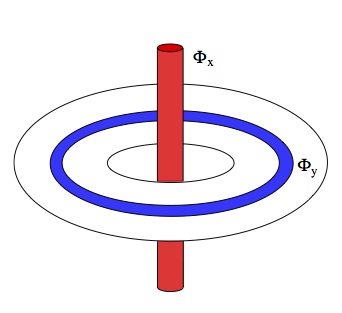
Wednesday, March 24, 2010

Problems with Hartree-Fock

This weeks reading from Advanced Solid State Physics by Philip Phillips is Chapter 5, Interacting Electron Gas. Some key ideas:

The Hartee-Fock equations for the Jellium model [equations 5.4 to 5.6] have plane wave solutions. These correspond to quasi-particles and have the energy dispersion relation 5.1.

The exchange hole refers to the fact that electrons of like spin avoid one another due to the Pauli exclusion principle. This means the energy is less than the Coulomb repulsion energy of an electron moving in a uniform charge density.

The total energy of all the occupied Hartree-Fock states gives an "exchange energy" which only depends on the electron density (5.14). [This expression is sometimes used in the X_alpha method of Slater and the Local Density Approximation (LDA) of Density Functional Theory (DFT)].

The HF excitation spectrum is qualitatively incorrect. It predicts that the low-temperature specific heat of metals should go like T/ln(T) whereas it is always observed to go like T. This problem can be resolved by including screening, which cuts off the long-ranged Coulomb potential (see Chapter 8).

HF energy can be used to calculate the cohesive energy of simple metals. The result is worse than the non-interacting electron model! This difficulty arises because the direct and exchange Coulomb energies almost cancel each other.

The quasi-particles have lower energy than free particles because of the exchange hole.

Wednesday, March 17, 2010

A good place to start a many-body theory

Last week I briefly discussed the notion of quasi-particle weight and recommended P.W. Anderson, Concepts in Solids: Lectures on the Theory of Solids, Chapter 3.

This week we looked at Chapter 4, in Advanced Solid State Physics, The Hartree-Fock approximation.
This is can be viewed as a mean-field theory and/or a variational approximation to the ground state energy. One assumes many-particle ground state wavefunction can be written as a single Slater determinant.

One way to understand the Hartree-Fock equations (4.23) as a mean-field theory is the following. Consider the Coulomb interaction energy between an electron in one orbital (denoted nu) [which has an associated charge density] and the charge density associated with all the other occupied orbitals.
The one electron energies are actually the Lagrange multipliers introduced to care of the normalisation constrain for the one electron orbital wave functions.

The exchange interaction (between electrons in different orbitals) arises because of the fermion statistics. It leads to a splitting of singlet and triplet states. The latter has lower energy because the electrons are forced to occupy different spatial regions by the Pauli exclusion principle.

Hartree-Fock theory is the starting point for almost any attempt at solving a quantum many-body problem.
In Chapter 6, we will see how Anderson used it to solve the problem of local magnetic moments in metals, work recognized in the 1977 Nobel Prize in Physics.

If you want to solve the Hartree-Fock equations for a few simple molecules try WebMO

Wednesday, March 10, 2010

To commute or not to commute

This weeks reading from Advanced Solid State Physics by Philip Phillips is Chapter 3, Second Quantization. Some key ideas:

Quasi-particles in quantum many-body theory are either fermions or bosons. The difference is seen in whether their creation and annihilation operators obey anti-commutation or commutation relations.

The second quantisation formalism provides a convenient and powerful book-keeping device to keep track of the fermionic (or bosonic) character of many-particle states.

A key result to become familiar with is writing a many-body Hamiltonian operator in second-quantised form, as in equation (3.33).
This is the starting point of Chapter 4, The Hartree-Fock approximation.

In the next chapter we will see how the anti-symmetric (fermionic) character of many-electron quantum states has an important physical consequence: the exchange interaction which leads to an energy splitting of singlet and triplet excited states. [A clear discussion of this is in Chapter 18, The Helium Atom, in Quantum Physics by Stephen Gasciorowicz.]

Friday, March 5, 2010

Quantifying electronic correlations in simple metals

Considering natural orbitals in quantum chemistry this week reminded me of a key property of Fermi liquids: the existence of a discontinuity in the wavevector dependence of the Fourier transform of the one-electron reduced density matrix n(k).

The figure below is taken from a PRB paper by Paola Gori-Giorgi and Paul Ziesche. It shows the wavevector dependence of n(k) for a uniform electron liquid (at density corresponding to an interparticle spacing of rs=5, comparable to a typical metal). k=1 corresponds to the Fermi wavevector.
For a non-interacting fermion system n(k)=1 for k less than 1 and 0 for k >1.

The figure below shows the magnitude of zF, the jump in n(k) at k=1, as a function of rs. Increasing rs corresponds to decreasing electron density and increasing correlation effects. This quantity zF can be related to the quasi-particle weight associated with the pole in the one-electron Greens function. The smaller zF the larger the effective mass of the quasi-particles.
In a few weeks we will be looking at all this in the Quantum Many-Body Theory reading group.

Wednesday, March 3, 2010

Simplifying the Theory of Everything

This weeks reading from Advanced Solid State Physics by Philip Phillips is Chapter 2, The Born-Oppenheimer [BO] Approximation.

This reflects a key idea in quantum many-body theory: when there is a clear separation of energy scales one can often simplify the theory greatly and identify distinct quasi-particles [e.g., phonons and electronic quasi-particles] corresponding to the different energy scales.

Without BO there would be no quantum chemistry and no quantum theory of electronic properties of crystals.

BO is a consequence of the fact that electrons are much lighter than nuclei. Consequently, electrons in a molecule or solid have average velocities that are typically orders of magnitude faster than the nuclei.

Equation (2.1) is the Hamiltonian

The symbols Zα and Mα are the atomic number and mass of the αth nucleus, Rα is the location of this nucleus, e and m are the electron charge and mass, r j is the location of the j th electron, and ℏ is Planck's constant.

If we could solve this Hamiltonian we would have Laughlin and Pines Theory of Everything.

Equations (2.10) and (2.14) are the key results of the chapter.

But there are many interesting and important situations where BO breaks down. Cases for molecules are discussed here.

Friday, February 26, 2010

When interactions do not seem to matter

At wednesday's meeting of the Quantum many-body theory reading group, we discussed the following points about the chapter, "Non-interacting electron gas".

To get more context on this chapter read, Chapter 2 of Ashcroft and Mermin, Solid State Physics. In particular, they show how the non-interacting fermion model of Sommerfeld can give a good semi-quantitative description of a wide range of properties of elemental metals such as heat capacity, magnetic susceptibility, and bulk compressibility.

Why is this success surprising? A simple estimate suggests that average potential energy due to the interactions of the electrons between each other is 1-10 times larger than the kinetic energy. Yet, the non-interacting fermion model ignores these electron-electron interactions.
So why does the theory work so well? For profound reasons embodied in Landau's Fermi liquid theory, the elementary excitations (quasi-particles) in a three-dimensional electron liquid (chapter 5) have a one-to-one correspondence to those of the non-interacting fermion model.
A key aspect to this is that the electron liquid has sufficiently high density that the Fermi energy is of the order of several eV (1 eV= 11,000 K)...
Consequently, most properties of elemental metals are determined by properties of the Fermi surface, i.e. only states near the Fermi energy.

All of this breaks down in one dimension (chapter 9) .
In two dimensions the existence of non-Fermi liquids is still controversial.

Next week we discuss chapter 2, "The Born-Oppenheimer Approximation."

Wednesday, February 24, 2010

Reading group on quantum many-body theory

Today I am starting a weekly reading group on the basics of quantum many-body theory, mostly for postgraduate students. This is to partly fill the gap from the fact that we do not have graduate courses in Australia. We are going to read a chapter each week from the book, Advanced Solid State Physics, by Philip Phillips. I chose this for its clarity, brevity, and treatment of modern topics.

This initiative was inspired by a highly successful group that a colleague, Andrew Doherty, ran on quantum field theory last.
Previously, I was involved in groups that looked at Fulde's book, Electronic correlations in molecules and solids, and a review by Shaik and Hiberty on valence bond theory (now superseeded by their excellent book). I found both immensely valuable.

What is the value of such ventures?
I find understanding increases greatly when I read something and then talk about it. Furthermore, rather than getting stuck at points of derivations talking to someone else can remove the logjam.
The weekly meeting also provides accountability and discipline to keep reading.

Lecture on Debye model for solids

 I just finished preparing my undergraduate lecture on the Debye model for solids. Here are my slides . The course is a third-year course on...