Showing posts with label universality. Show all posts

Wednesday, August 12, 2026

What is the integer quantum Hall effect?

And why is it so amazing?

Surprises [about physics in two dimensions] occurred in the 1980s when it became possible to study Landau levels [the quantised energy levels of electrons in a magnetic field] in Flatland. This happens when the electrons are completely constrained to move in only two dimensions. The surface within which the electrons move needs to be extremely flat and free from defects and impurities. Advances in semiconductor technology in the 1970s led to two realisations of this Flatland. Both were developed for technological reasons: the desire to have transistors in which the electrons and holes can move extremely fast. One class of device is silicon MOSFETs (Metal Oxide Semiconductor Field Effect Transistors). The second class is heterostructures, where layers of ultrapure semiconductors such as gallium arsenide are grown on top of each other, one layer of atoms at a time. In both classes of device, a fixed density of electrons (or holes) can be injected at the surface. These charge carriers can move freely in Flatland, acting like a fluid. Things get interesting when the number of charge carriers is small enough and the magnetic field is large enough that the number of charge carriers is comparable to the number of quanta of magnetic flux that pass through the system. Then, the quantum state of most of the charge carriers is one of the lowest Landau energy levels. 

To achieve this regime for the cleanest possible systems requires magnetic fields more than a hundred thousand times stronger than that of the Earth. Furthermore, the magnetic field must be spatially uniform in the region where the semiconductor system is located, stable over the time of the measurements, and the interior of the electromagnet producing the field must be large enough to contain a refrigerator that can cool the charge carriers in the system down to a few degrees above absolute zero. By 1980, all these conditions became possible. Klaus von Klitzing was able to perform measurements of the Hall resistance versus magnetic field in a special high magnetic field laboratory in Grenoble, France. The results were surprising and are shown schematically in Figure 35 below. There are four noteworthy features. 


Figure 35. The quantum Hall effect. The Hall resistance is shown as a function of the strength of the magnetic field and has a step-like structure. The integer n is related to the quantized energy that the charge carriers have.

First, there are distinct steps in the curve. At small magnetic fields the Hall resistance versus field is a straight line, as expected for the classical Hall effect. However, at larger fields there are plateaus in the curve.

Second, each of the plateaus is extremely flat. Von Klitzing found that the magnitude of the Hall voltage on each plateau did not vary to one part in ten million. As he varied the magnetic field, he noticed that the first seven digits on the voltmeter he was using did not change. He wondered if the voltmeter was broken and had become jammed. But it was working.

Third, the magnitude of the Hall resistance for all the plateaus has a simple relationship to fundamental physical constants. The quantum of resistance is defined as equal to h/2e^2 . When you calculate this quantity, the answer (25,812.827 ohms) is in the units of electrical resistance. The value of the Hall resistance is precisely equal to this value divided by an integer (n=1,2,3 …) which is related to the highest quantized energy (Landau level) that an electron can have at that magnetic field. That is why it is known as the integer quantum Hall effect.

Fourth, the observed value of the Hall resistance for each of the plateaus is independent of many details, including the temperature, the amount of disorder in the material, the chemical composition of system (silicon versus gallium arsenide), or whether the charge carriers are electrons or holes. [This independence is characteristic of the universality associated with emergent phenomena]. 

These four features are similar to those for the steps associated with the macroscopic quantum effects (magnetic flux in superconducting cylinders, circulation in a superfluid, Josephson effects) discussed in the previous chapter. Again, it is astonishing that a macroscopic measurement – of electrical resistance - of a macroscopic system can determine fundamental constants that are normally associated with properties of atomic systems. Just as the Josephson effect led to a new standard measure for voltage, the quantum Hall effect led to a new standard measure for electrical resistance.

Anyone familiar with building electronic circuits will have used resistors of varying values in ohms (Ω), e.g., 10 Ω or 25 kΩ. When these resistors are made, they are calibrated against some standard. For making integrated circuits with billions of transistors this standard needs to be extremely accurate. In 1990 the international standard for the ohm was changed to be that defined by the quantum Hall effect. Previously, the ohm was defined by the electrical resistance of a column of liquid mercury with constant cross-sectional area, 106.3 cm long, a mass of 14.4521 grams and a temperature 0 °C. Like the Josephson voltage standard, the quantum Hall resistance standard has the advantage of precision, portability, reliability, reproducibility, and independence of platform. 

An extract from Topology Matters, Chapter 8, Condensed Matter Physics: A Very Short Introduction.

Tuesday, June 30, 2026

Biological evolution and emergence

 The theory of evolution explains the origin of biological diversity and levels of similarity between species. A characteristic of emergence is that many iterations of a simple law (natural selection of the fittest to reproduce) can produce novel, diverse and rich structures. In biological evolution many generations in a population can produce new traits and species. 

Many of the most debated issues about evolution relate to the different characteristics of emergence and are briefly discussed below.

Scales

Central to emergence are the ideas of “many” and of scales. The former can take two forms: a system composed of many interacting components, or a system that undergoes many iterations according to a rule that is repeated many times. For evolution, both forms of “many” are relevant and have several dimensions. Evolution occurs in a population, i.e., a community of many members of a species living in a specific environment. Each member of the population has a specific genotype (many genes), which largely determines biological characteristics, from proteins to organs, defined as the phenotype. The environment also consists of many interacting species. Natural selection can act at multiple levels: on genes, cells, organisms, species, and groups of species.

Microscopic and macroscopic scales can also manifest in different ways. In terms of length, the micro- and macro- scales can be defined in terms of genotypes and phenotypes, respectively. In terms of time, microevolution and macroevolution roughly correspond to directly observable timescales and geological timescales, respectively. They are associated with the emergence of new traits within a species and new species, respectively.

Novelty

Development of new traits and species occurs over many generations, due to the repetition of the rule of natural selection.

Evolution theory uses concepts such as natural selection, survival of the fittest, niches, and hierarchical trees, that are not present in chemistry and physics. 

Connecting micro- and macro- properties

As for other systems, this is one of the great challenges of emergence. Genotypes and phenotypes are extremely well characterised. Genotype-phenotype maps seek to connect these micro- and macro- levels. A detailed understanding of how microevolution leads to macroevolution is a challenge.

Discontinuities

In microevolution, new traits occur within a species due to (continuous) adaptation to the environment. In contrast, in macroevolution, new organs and species can occur suddenly (at least on geological timescales). An example is the Cambrian explosion of new life forms. Extinctions can also represent discontinuities.

Evolution of a population occurs in response to changes in an environment. New traits, new species, and extinctions can be viewed as qualitative changes due to quantitative changes. For example, small changes in the oxygen concentration in the atmosphere is one (among many) hypotheses for the cause of the Cambrian explosion.

Using techniques from statistical physics, the transition of a species from survival to extinction can be viewed as a non-equilibrium phase transition to an absorbing state. The order parameter is the population and a toy model is directed population.1

Diversity with limitations

All species are based on the same biochemistry of DNA and proteins. Yet from these same building blocks there is an incredible diversity: more than 8 million distinct species, including more than 10,000 species of birds and more than 15,000 species of ants. Darwin said nature produces “endless forms most beautiful.”

But there are limitations. For example, the number of species with more than one head, brain, heart, or liver is limited. There are many more genotypes than phenotypes. 

The dominant view is that evolution is driven by random genetic mutations. Debates have arisen about how much evolution is limited (constrained) by morphology and environment.

Ball stated: (p. 332)

“convergent evolution is often regarded as a sign that certain shapes or structures are ideal adaptations to particular environments for physical reasons: wings consisting of flat, thin membranes are best for flying, torpedo-shaped bodies a streamlined for efficient swimming, and so on… There is a tendency in evolutionary biology to regard natural selection as a process with an infinite palette: anything is possible so long as it doesn't break the laws of physics. But the laws of physics might impose more constraint than that, precisely because biology uses rather than merely suffers them.”

Universality

Not all mutations produce a change in phenotype. There are neutral mutations. There are many more genotypes than phenotypes. In other words, genotype-phenotype maps are many-to-one.

Species that are unrelated or distantly related (in the tree of life) sometimes have traits or behaviours that are similar. Convergent evolution is the hypothesis that natural selection produced the same outcome in a different context. 

Modularity at the mesoscale

The economist Simon pointed out that evolution can occur on much faster time scales than might be expected because of modularity. According to Clune et al.

“A long-standing, open question in biology is how populations are capable of rapidly adapting to novel environments, a trait called evolvability [1]. A major contributor to evolvability is the fact that many biological entities are modular, especially the many biological processes and structures that can be modelled as networks, such as metabolic pathways, gene regulation, protein interactions and animal brains [1–7].”

Ball highlighted how domains in proteins provide functional modules that evolution uses: (pp. 174-5)

“the evolution of metazoan proteins is not so much a slow affair of letting random genetic mutations change one amino acid for another and seeing what effect it produces. Rather, it constitutes a reshuffling of already functional modules to produce multidomain molecules with new potential - a strategy much more likely to yield successful results…  the “unit” of molecular evolution here is not really the base pair of DNA or the amino acid or protein, or the gene itself, by the peers at a scale intermediate between the two: the module of a domain. It seems that this shuffling, rather than the slow mutation of primary base sequences, is what has driven the evolution of animals.”

Johnston et al. considered an algorithmic picture of evolution that 

“suggests that symmetric structures preferentially arise not just due to natural selection but also because they require less specific information to encode and are therefore much more likely to appear as phenotypic variation through random mutations… many genotype–phenotype maps are exponentially biased toward phenotypes with low descriptional complexity. A preference for symmetry is a special case of this bias… Lower descriptional complexity also correlates with higher mutational robustness, which may aid the evolution of complex modular assemblies of multiple components.”

Self-organisation

Complex biological structures, from proteins to organisms, have formed spontaneously due to evolution over millions of years. Their intricacy and functionality have led to claims of purpose and design. However, this is argued to be an “apparent” design, just like an economy whose self-organisation appears “as if” it is guided by an “invisible hand.”

Kauffman claimed that self-organisation is as important as natural selection in driving evolution.

Unpredictability

A contested question about evolution is the role of contingency (historical accidents) and whether the evolution of complex life forms, particularly humans, was an accident of history or inevitable.

Irreducibility

Until recently, evolutionary biology has been dominated by a reductionist gene-centric view, popularised by Dawkins. However, recent discussions about systems biology, evo-devo, and epigenetics have questioned this view. Some characterise these alternative views as a form of structuralism.

Complexity

An algorithmic picture of evolution suggests that simplicity spontaneously emerges as many genotype-phenotype maps may be biased towards phenotypes with low descriptional complexity. 

Toy models

An earlier post discussed the key role that toy models, such as “bean bag” genetics, have played in evolutionary theory.

Cross-fertilisation of fields

Ideas from evolution have stimulated the development of genetic algorithms in computer science.

Drossel has reviewed connections between evolution and statistical physics, including a wide range of toy models. Examples include spin glass models that give rise to rugged landscapes for fitness and can describe hierarchical structures, comparable to Darwin’s tree of life. Goldenfeld and Woese argued that evolution can be viewed as a collective phenomenon far from equilibrium. The toy model central to their discussion is directed percolation.

I welcome comments. My knowledge of biology is limited, and scientifically some the ideas above can be contentious. (Never mind philosophy, politics, or theology!)

Tuesday, June 23, 2026

Critical points in condensed matter illuminate universality

Every person is unique. No two people are identical. We differ in physical appearance, personality, fingerprints, heartbeat, gait, and DNA. Such differences are used to identify criminals and in video surveillance of citizens by nation states. Yet in other ways all humans are the same. We all have brains, hearts, and lungs. All our bodies use the same biochemistry to stay alive: whether to breathe oxygen, digest food, or fight infections. On some level we have common aspirations: to survive, to be loved, to be happy, and to find meaning and purpose. Yet these aspirations find many expressions. Humans have certain universal qualities and properties, yet at a finer level of detail there is a particularity of each of these properties. They are at one level the same but are not the same at another level. 

All academic disciplines search for universals; they develop categories, concepts, and theories that overarch particularities. Biologists classify species of plants and animals and types of cells and viruses. All biological systems use the same molecules (DNA, RNA, and proteins) and chemical reactions. The same genetic code uses the information encoded in a piece of DNA to make proteins with specific functions. Anthropologists study the immense diversity of human cultures and societies. This diversity can be described in terms of universal concepts such as kinship, family, ritual, community, economics, law, and morality. Linguists study the common structures and grammars of the thousands of different human languages.  Although the world we live in is diverse, disciplines have each discovered some universals.

Condensed matter physicists study diverse states of matter and the transitions between them. A surprising discovery is that there is much more universality than might be expected, particularly given the chemical and structural diversity of materials. In this chapter, I will discuss the nature of this universality, how it emerges, and the length scales associated with transitions between different states of matter. Landau’s great insight was that many of the chemical and structural details of materials are irrelevant to understanding phase transitions. Furthermore, a precise classification of different types of phase transitions, into what are called universality classes, can be made. For example, superconducting, superfluid, and a subset of magnetic transitions are in the same class. The determinants of the universality classes are the symmetry of the state and the spatial dimensionality of the system. None of the other details matter.

Many phase diagrams (such as the Figure above) include a critical point, located at the end of a boundary between two different states of matter. A common example is the critical point that occurs at a specific temperature and pressure for a transition between a liquid and a gas. Understanding the physical properties of a material close to its critical point was a great challenge for theoretical physics, lasting a hundred years, and was only solved in the 1970s. The powerful theoretical ideas and techniques that were developed provide a quantitative way to relate the properties of a system at one length scale to properties at a different length scale. These techniques also have application to a wide range of other problems and fields including elementary particle physics, chaos theory, fractals, polymers, and machine learning. New insights were gained into universality and emergent phenomena.

An extract from "The Critical Point," chapter 6, Condensed Matter Physics: A Very Short Introduction

Friday, January 9, 2026

What is temperature?

Temperature is NOT the average kinetic energy.

When I taught thermodynamics to second year undergraduates one of the preconceived notions that was hard to dislodge from students was that temperature IS a measure of the average kinetic energy of the atoms or molecules in a system.

First, I will give the merits of this view and then explain why it is problematic.

A profound and important insight from Maxwell's kinetic theory of ideal gases was that the average kinetic energy of the atoms/molecules in the gas is related to the absolute temperature defined by Kelvin. This result was important because it provided a microscopic basis for Joule's discovery of the mechanical equivalence of heat.

The result does not just hold for an ideal gas. Classical statistical mechanics can be used to show that for any system of interacting particles, the average kinetic energy of each particle is 3/2 kT. The proof proceeds in the same manner as the equipartition theorem. In the partition function, the integral over momentum factorises and can be evaluated exactly as it is Gaussian integral.

However, this simple relationship between temperature and kinetic energy does not hold for quantum systems. Consider the case of a harmonic oscillator, with frequency omega. By the virial theorem, the average kinetic energy is equal to the average potential energy. Thus, the average kinetic energy is half of the internal energy U(T), which is a universal function f(T/omega). Thus, if we compare two oscillators with different frequencies, at the same temperature, they will have different kinetic energies.

This problem is not just some quantum exotica that is only relevant at extremely low temperatures. Most solids are "quantum" at room temperature because they have a Debye temperature in the range of 200-1000 K.

Temperature is a macroscopic variable, not a microscopic one. It should be defined in terms of the zeroth law of thermodynamics.

Temperature is a state variable associated with a system in thermal equilibrium. It tells us whether that system will be in thermal equilibrium with another system. Consider two separated systems with temperatures T1 and T2. If they are brought into thermal contact, their states will not change if and only if T1=T2.

A thermometer is a system with a single state variable. The value of that variable is an empirical temperature.

Aside. This view of temperature was used by Planck in his book, Treatise on Thermodynamics, first published in 1905.

I am thankful to my undergraduate mentor, Hans Buchdahl for teaching me that thermodynamics is conceptually coherent and beautiful. 

This discussion illustrates that temperature is an emergent property. It is a property of a macroscopic system that the parts of the system do not have. The temperature is independent of the microscopic composition of the system or its history. This universality is a characteristic of many emergent properties.

In another post, I hope to explain what the absolute temperature, first introduced by Kelvin, is.

Tuesday, November 25, 2025

Elastic interactions and complex patterns in binary systems

One of the many beauties of condensed matter physics is that it can reveal and illuminate how two systems or phenomena that at first appear to be quite different actually involve similar physics. This is an example of universality: for emergent phenomena, many details don't really matter. One example is the similarities between superconductivity and superfluidity. A consequence of universality is that the same concepts, techniques, toy models, and effective theories can be used to describe a wide range of systems.

The complex organometallic molecules, known by the misnomer "spin crossover" compounds, exhibit a rich range of phase transitions and types of spatial order. Key aspects of the physics are the following.

  • Each transition metal ion can be in one of two possible states: low-spin or high-spin. 
  • The size of each molecular complex depends on the spin state.
  • Consequently, the molecules interact with their neighbours via elastic interactions.

A toy model that can describe this is expanding balls connected by springs. Various versions of this type of model are reviewed here. The simplest version is the chain model below.

It turns out there are other classes of systems described by similar models. As far as I am aware, this was first pointed out in Consequences of Lattice Mismatch for Phase Equilibrium in Heterostructured Solids Layne B. Frechette, Christoph Dellago, Phillip L. Geissler

That paper is motivated by experiments on the growth of semiconductor quantum dots, by ion exchange, such as when CdSe is bathed in an Ag-rich solution and Ag2Se is produced with heterostructures (i.e., patterns of Ag and Se ions) that are different from the bulk crystal.

They consider the balls and springs model above on a triangular lattice.

They also point out how similar physics is relevant to binary metal alloys, e.g, AgCu, citing 

Ising model for phase separation in alloys with anisotropic elastic interaction—I. Theory, P. Fratzl and O. Penrose

Those authors consider a square lattice with elastic interactions associated with bond stretching along the edges and diagonals of the squares and bending of the square angles.

Frechette et al. also mention experiments on thin films of  DNA modified metallic nanoparticles. Compared to atomic systems these can tolerate larger lattice-mismatch before the formation of defects due to lattice strain.

Other systems (not mentioned) described by similar Ising models are metal-hydrogen systems, where the Ising pseudospin signifies whether a hydrogen atom is present at a particular site in the metallic crystal.

Frechette et al. start with the ball and springs model and "integrate out" the springs to obtain an effective Hamiltonian, which is an Ising model.


The spatial range of the interaction between Ising spins is shown in the colour-shaded plot below.
The interaction has two components.
One is an infinite range "ferromagnetic" part, seen as the light blue below.
The second is a short-range interaction which is mostly "antiferromagnetic" (i.e., red), but extends over several lattice sites. (Note, this interaction will be frustrated on the triangular lattice).


Using this toy model, Frechette et al. can obtain complex patterns (heterostructures) similar to those seen in quantum dots grown by ion exchange.

There is some subtle (and confusing) physics associated with deriving the Ising model from the ball and springs model. 

Due to the long-range nature of elastic interactions, the boundary conditions matter. 

The infinite range part of the Ising interaction arises from dealing with the lattice constant for the crystal, depending on the net "magnetisation" of the "spins". But that is a story for another day.

Friday, May 2, 2025

Could quantum mechanics be emergent?

One of the biggest challenges in the foundations of physics is the quantum measurement problem. It is associated with a few key (distinct but related) questions.

i. How does a measurement convert a coherent state undergoing unitary dynamics to a "classical" mixed state for which we can talk about probabilities of outcomes?

ii. Why is the outcome of an individual measurement always definite for the "pointer states" of the measuring apparatus?

iii. Can one derive the Born rule, which gives the probability of a particular outcome?

Emergence of the classical world from the quantum world via decoherence

A quantum system always interacts to some extent with its environment. This interaction leads to decoherence, whereby quantum interference effects are washed out. Consequently, superposition states of the system decay into mixed states described by a diagonal density matrix. A major research goal of the past three decades has been understanding decoherence and the extent to which it does provide answers to the quantum measurement problem. One achievement is that decoherence theory seems to give a mechanism and time scale for the “collapse of the wavefunction” within the framework of unitary dynamics. However, this is not the case because decoherence is not the same as a projection (which is what a single quantum measurement is). Decoherence does not produce definite outcomes but rather statistical mixtures. Decoherence only resolves the issue if one identifies ensembles of measured states with ensembles of the decohered density matrix (the statistical interpretation of quantum mechanics). Thus, it seems decoherence only answers the first question above, but not the last two. On the other hand, Zurek has pushed the decoherence picture further and given a “derivation” of the Born rule within its framework. In other words, decoherence does not solve the quantum measurement problem: measurements always produce definite outcomes.

One approach to solving the problem is to view quantum theory as only an approximate theory. In particular, it could be an effective theory for some underlying theory valid at time and length scales much smaller than those for which quantum theory has been precisely tested by experiments. 

Emergence of quantum field theory from a “classical” statistical theory

Einstein did not accept the statistical nature of quantum theory and considered it should be derivable from a more “realistic” theory. In particular, he suggested “a complete physical description, the statistical quantum theory would …. take an approximately analogous position to the statistical mechanics within the framework of classical mechanics.”

Einstein's challenge was taken up in a concrete and impressive fashion by Stephen Adler in a book, “Quantum Theory as an Emergent Phenomenon: The Statistical Mechanics of Matrix Models as the Precursor of Quantum Field Theory”, published in 2004.  A helpful summary is given in a review by Pearle.

The starting point is "classical" dynamical variables qr and pr which are NxN matrices, where N is even. Half of these variables are bosonic, and the others are fermionic. They all obey Hamilton's equations of motion for an unspecified Hamiltonian H. Three quantities are conserved: H, the fermion number N, and (very importantly) the traceless anti-self-adjoint matrix, 

where the first term is the sum for all the bosonic variables of their commutator, and the second is the sum over anti-commutators for the fermionic variables.

Quantum theory is obtained by tracing over all the classical variables with respect to a canonical ensemble with three (matrix) Lagrange multipliers [analogues of temperature and chemical potential in conventional statistical mechanics] corresponding to the conserved quantities H, N, and C. The expectation values of the diagonal elements of C are assumed to all have the same value, hbar!

An analogy of the equipartition theorem in classical statistical mechanics (which looks like a Ward identity in quantum field theory) leads to dynamical equations (trace dynamics) for effective fields. To make these equations look like regular quantum field theory, an assumption is made about a hierarchy of length, energy, and "temperature" [Lagrange multiplier] scales, which cause the Trace dynamics to be dominated by C rather than H, the trace Hamiltonian. Adler suggests these scales may be Planck scales. Then, the usual quantum dynamical equations and the Dirac correspondence of Poisson brackets and commutators emerge. Most of the actual details of the trace Hamiltonian H do not matter; another case of universality, a common characteristic of emergent phenomena.

The “classical” field C fluctuates about its average value. These fluctuations can be identified with corrections to locality in quantum field theory and with the noise terms which appear in the modified Schrodinger equation of "physical collapse" models of quantum theory.

More recently, theorists including Gerard t’Hooft and John Preskill have investigated how quantum mechanics can emerge from other deterministic systems. This is sometimes known as the emergent quantum mechanics (EmQM) hypothesis.

Underlying deterministic systems considered include

Hamilton-Randers systems defined in co-tangent spaces of large-dimensional configuration spaces

neural networks,

cellular automata,

fast-moving classical variables, and the

 boundary of a local classical model with a length that is exponentially large in the number of qubits in the quantum system. 

In most of these versions of EmQM the length scale at which the underlying theory becomes relevant is conjectured to be of the order of the Planck length.

The fact that quantum theory can emerge from such a diverse range of underlying theories again illustrates universality.

The question of quantum physics emerging from an underlying classical theory is not just a question in the foundations of physics or in philosophy. Slagle points out that Emergent Quantum Mechanics may mean that the computational power of quantum computers is severely limited. He has proposed a specific experimental protocol to test for EmQM. A large number d of entangling gates (the circuit depth d) are applied to n qbits in the computational basis, followed by the inverse gates. This is followed by measurement in the computational basis. The fidelity should decay exponentially with d, whereas for EmQM will decay much faster above some critical d, for sufficiently large n.

Independent of experimental evidence, EmQM provides an alternative interpretation to quantum theory that avoids the thorny issues such as the many-worlds interpretation.

Wednesday, January 22, 2025

Quantum states of matter and metrology

Two characteristics of states of matter are associated with them being referred to as quantum. One characteristic is the importance of quantum statistics of particles, i.e., that the system is composed of particles that obey Fermi-Dirac or Bose-Einstein statistics. The second characteristic is that a macroscopic property is quantized with values determined by Planck’s constant. I now discuss each of these with respect to emergence.

Quantum statistics. 

For a system of non-interacting  fermions and bosons at high temperatures the properties of the system are those of a classical ideal gas. As the temperature decreases there is a smooth crossover to low-temperature properties that are qualitatively different for fermions, bosons, and classical particles. This crossover occurs around a temperature, known as the degeneracy temperature, that is dependent on the particle density and Planck’s constant. 

Many of the properties resulting from quantum statistics also occur in systems of strongly interacting particles and this is central to the concept of Landau’s Fermi liquid and viewing liquid 4He as a boson liquid. If liquid 3He and the electron liquid in elemental metals are viewed as a gas of non-interacting fermions, the degeneracy temperature is about 1 K and 1000 K, respectively. Thermodynamic properties are qualitatively different above and below the degeneracy temperature. Low-temperature properties can have values that differ by orders of magnitude from classical values and have a different temperature dependence. In contrast to a classical ideal gas, a fermion gas has a non-zero pressure at zero temperature and its magnitude is determined by Planck’s constant. This degeneracy pressure is responsible for the gravitational stability of white dwarf and neutron stars.  

These properties of systems of particles can be viewed as emergent properties, in the sense of novelty, as they are qualitatively different from high-temperature properties. However, they involve a crossover as a function of temperature and so are not associated with discontinuity. They also are not associated with unpredictability as they are straightforward to calculate from a knowledge of microscopic properties.

Quantised macroscopic properties.

These provide a more dramatic illustration of emergence. Here I consider four specific systems: superconducting cylinders, rotating superfluids, Josephson junctions, and the integer Quantum Hall effect. All of these systems have a macroscopic property that is observed to have the following features.

i. As an external parameter is varied the quantity varies in a step-like manner with discrete values on the steps. This is contrast to the smooth linear variation seen when the material is not condensed into the quantum state of matter.

ii. The value on the steps is an integer multiple of some specific parameter.

iii. This parameter (unit of quantisation) only depends on Planck’s constant h and other fundamental constants. 

iv. The unit of quantisation does not depend on details of the material, such as chemical composition, or details of the device, such as its geometrical dimensions.

v. The quantisation has been observed in diverse materials and devices.

vi. Explanation of the quantisation involves topology.

Superconducting cylinders. A hollow cylinder of a metal is placed in a magnetic field parallel to the axis of the cylinder. In the metallic state the magnetic flux enclosed by the cylinder increases linearly with the magnitude of the external magnetic field. In the superconducting state, the flux is quantized in units of the magnetic flux quantum, Φ0 = h/2e where e is the charge on an electron. It is also found that in a type II superconductor the vortices that occur in the presence of an external magnetic field enclose a magnetic flux equal to Φ0.  

Rotating superfluids. When a cylinder containing a normal fluid is rotated about an axis passing down the centre of the cylinder the fluid rotates with a circulation proportional to the speed of rotation and the diameter of the cylinder. In contrast, in a superfluid, as the speed of rotation is varied the circulation is quantised in units of h/M where M is the mass of one atom in the fluid. This quantity is also the circulation around a single vortex in the superfluid. 

Josephson junctions. In the metallic state the current passing through a junction increases linearly with the voltage applied across the junction. In the superconducting state the AC Josephson effect occurs. If a beam of microwaves of constant frequency is incident on the junction, jumps occur in the current when the voltage is an integer multiple of h/2e. The quantisation is observed to better than one part in a million (ppm).

Integer Quantum Hall effect. In a normal conductor the Hall resistance increases linearly with the external magnetic field for small magnetic fields. In contrast, in a two-dimensional conductor at high magnetic fields the Hall resistance is quantized in units of h/2e^2. The quantisation is observed to better than one part in ten million. Reflecting universality, the observed value of the Hall resistance for each of the plateaus is independent of many details, including the temperature, the amount of disorder in the material, the chemical composition of system (silicon versus gallium arsenide), or whether the charge carriers are electrons or holes.

Other examples of macroscopic quantum effects are seen in SQUIDs (Superconducting Quantum Interference Devices). They exhibit quantum interference phenomena analogous to the double-slit experiment. The electrical current passing through the SQUID has a periodicity defined by the ratio of the magnetic flux inside the current loop of the SQUID and the quantum of magnetic flux.

The precision of the quantisation provides a means to accurately determine fundamental constants. Indeed, the title of the paper announcing the discovery of the integer quantum Hall effect was, “New Method for High-Accuracy Determination of the Fine-Structure Constant Based on Quantized Hall Resistance.” It is astonishing that a macroscopic measurement of a property of a macroscopic system, such as the electrical resistance, can determine fundamental constants that are normally associated with the microscale and properties of atomic systems. 

Laughlin and Pines claimed that the quantisation phenomena described above reflect organizing principles associated with emergent phenomena, and their universality supports their claim of the unpredictability of emergent properties. 

Quantum states of matter and metrology

The universality of these macroscopic quantum effects has practical applications in metrology, the study of measurement and the associated units and standards. In 1990 new international standards were defined for the units of voltage and electrical resistance, based on the quantum Hall effect and the AC Josephson effect, respectively.

Prior to 1990 the standard used to define one volt was based on a particular type of electrical battery, known as a Weston cell. The new standard using the AC Josephson effect allowed voltages to be defined with a precision of better than one part per billion. This change was motivated not only by improved precision, but also improved portability, reproducibility, and flexibility. The old voltage standard involved a specific material and device and required making duplicate copies of the standard Weston cell. In contrast, the Josephson voltage standard is independent of the specific materials used and the details of the device. 

Prior to 1990 the international standard for the ohm was defined by the electrical resistance of a column of liquid mercury with constant cross-sectional area, 106.3 cm long, a mass of 14.4521 grams and a temperature 0 °C. Like the Josephson voltage standard, the quantum Hall resistance standard has the advantage of precision, portability, reliability, reproducibility, and independence of platform. The independence of the new voltage and resistance standards from the platform used reflects the fact that the Josephson and quantum Hall effects have the universality characteristic of emergent phenomena.

This post is an adaptation of material in Condensed Matter Physics: A Very Short Introduction

Wednesday, November 29, 2023

Emergence in nuclear physics

Nuclear physics exhibits many characteristics associated with emergent phenomena. These include a hierarchy of scales, effective interactions and theories, and universality.

The table below summarises how nuclear physics is concerned with phenomena that occur at a range of length and number scales. At each level of the hierarchy, there are effective interactions that are described by effective theories. Some of the biggest questions in the field concern how the effective theories that operate at each level are related to the levels above and below.

Moving from the bottom level to the second top level, relevant length scales increase from less than a femtometre to several femtometres.

The challenge in the 1950s was to reconcile the liquid drop model and the nuclear shell model. This led to the discovery of collective rotations and shape deformations. The observed small moments of inertia were explained by BCS theory. Integration of the liquid drop and shell models led to the award of the1975 Nobel Prize in Physics to Aage Bohr, Ben Mottelson, and Rainwater.

Since the 1980s a major challenge is to show how the strong nuclear force between two nucleons can be derived from Quantum Chromodynamics (QCD). The figure below illustrates how the attractive interaction between a neutron and a proton can be understood in terms of the creation and destruction of a down quark-antiquark pair. The figure is taken from here.

An outstanding problem concerns the equation of state for nuclear matter, such as found in neutron stars. A challenge is to learn more about this from the neutron star mergers that are detected in gravitational wave astronomy.

Characteristics of universality are also seen in nuclear physics. Landau’s Fermi liquid theory provides a basis for the nuclear shell model which starts from assuming that nucleons can be described in terms of weakly interacting quasiparticles moving in an average potential from the other nucleons. The BCS theory of superconductivity can be adapted to describe the pairing of nucleons, leading to energy differences between nuclei with odd and even numbers of nucleons. 

Universality is also evident in the statistical distribution of energy level spacings in heavy nuclei. They can be described by random matrix theory which makes no assumptions about the details of interactions between nucleons, only that the Hamiltonian matrix has unitary symmetry. Random matrix theory can also describe aspects of quantum chaos and zeros of the Riemann zeta function relevant to number theory.


Friday, February 10, 2023

Different dimensions to emergence for specific scientific disciplines

Emergence is a concept relevant to a wide range of scientific disciplines, from physics to sociology. Emergence is also at the heart of some of the biggest questions and challenges in each discipline. How might I justify that claim? How do we move beyond "emergence" just being a trendy buzzword?

Here I suggest some different facets of a specific discipline that with an emergent perspective may help to understand the discipline and to plan scientific strategy. This post will be primarily descriptive and the next prescriptive. Later I will illustrate both aspects with specific disciplines. Although, some of the facets below may be somewhat obvious, others are profound. 

Presence of distinct scales. Scales may involve length, time, or number of components in a system of interest. Different phenomena are observed at different scales.

Stratification and separation of scales. Distinct phenomena as usually seen over some range of scale and a distinct stratum can be associated with that scale. 


The image is from here.

Sub-disciplines (or sub-fields) are associated with each stratum. The discipline can be viewed as stratified. For example, biology has sub-disciplines associated with ecosystems, organisms (animals and plants), organs, cells, genes, and molecules. This is nicely captured in a series of articles in The Economist.

The system can be viewed as interacting components. The system of interest is composed of many parts. Identifying the relevant components and their interactions may be non-trivial or at least was in the past. For example, consider the discovery of atoms in chemistry, quarks in nuclear physics, Cooper pairs in superconductivity, and DNA in genetics.

Emergent properties. Systems of interest have distinct properties that the components of the system do not. These properties may have certain characteristics such as universality, irreducibility, or unpredictability.

Emergent entities. These distinct entities can only be defined at certain scales and emerge from interactions between components that are defined at some smaller scale. In biology, emergent entities include organisms, organs, cells, genes, and proteins. In condensed matter physics emergent entities include quasiparticles and topological defects.

Emergent phenomena. This is closely related to emergent properties and may be redundant. But a property is something that a system has and a phenomenon is something that it does. 

Different experimental probes for different scales. For example, for condensed matter different types of electromagnetic radiation from x-rays to microwaves are used to investigate a material at different length scales. The nature of the instruments used and the type and quality of information gained can be quite different for the different scales.

Simple theoretical models of interacting components.  From the perspective of the smallest scales most systems with emergent properties are complex in that they involve many degrees of freedom and so large amounts of information and parameters are required to define the state of the system. The system may also be complex in the sense that the emergent properties are non-trivial and hard to describe theoretically. But with insight simple models with just a few parameters and state variables can exhibit and describe the emergent properties. Examples of such models in condensed matter physics include Ising, Hubbard, and non-linear sigma models. Examples from sociology include agent-based models such as the Schelling model for racial segregation. Simple models can be viewed as effective theories, valid at a particular scale, and can illustrate universality.

Organising principles and concepts at each scale. The principles and concepts are only meaningful and relevant at a particular scale. An example from condensed matter physics and elementary particle physics is spontaneous symmetry breaking.

In another post, I will discuss how an emergentist perspective plays out in scientific strategy.

Thursday, April 15, 2021

Fifty years ago: three big discoveries in condensed matter

For the marketing plan for my Very Short Introduction, I was recently asked whether there were any significant anniversaries happening in condensed matter physics (and associated conferences). This is not something I normally think about.

I realised that fifty years ago there were three big discoveries. All eventually led to Nobel Prizes. Each discovery had a profound effect on the formation of condensed matter as a distinct discipline built around a few unifying concepts. At the time the discoveries and ideas appeared quite independent, but there are deep connections between them.

Renormalisation group and critical phenomena

In 1971 Ken Wilson published two papers  [PRB 4, 3174, and PRB 4, 3184] laying the foundations, followed by two PRLs in 1972, including one with the provocative title, Critical Exponents in 3.99 Dimensions

Wilson received the Nobel Prize in 1982. This work had many implications and applications. 

Explained universality in critical phenomena.

Highlighted how spatial dimensionality changes physics.

Illustrates why effective Hamiltonians work (so well).

Showed the power of quantum field theory techniques.

Defined concepts of scaling and fixed points.

Superfluidity in liquid 3He

In 1972,  Osheroff, Richardson, and Lee reported new phase transitions in liquid/solid 3He. Tony Leggett identified these transitions as due a superfluid phases and also identified the order parameters. The experimentalists shared the Nobel Prize in 1996 and Leggett in 2003. The discovery was significant for many reasons, beyond just being a new state of matter.

It provided a rich example of a state of matter with multiple broken symmetries. The order parameter has eighteen components, which can be viewed as a combined superfluid, ferromagnet, and liquid crystal.

The rich order parameter led to an exploration of diverse topological defects, from superfluid vortices with magnetic cores to boojums. This highlighted the concepts of broken symmetry, rigidity, and topological defects.

This was the first example of an unconventional fermionic superfluid. Specifically, it could be described by BCS theory, but not with s-wave pairing nor with the pairing mechanism of the electron-phonon interaction in elemental superconductors. This showed the adaptability of BCS theory. It laid the groundwork for understanding unconventional superconductivity in heavy fermions, organics, and cuprates.

Berezinskii-Kosterlitz-Thouless phase transitions

In Berezinskii published papers in 1970 and 1971, and Kosterlitz and Thouless published papers in 1972 and 1973. This work was significant for reasons including the following.

It showed states of matter and phase transitions were qualitatively different in two and three dimensions.

New concepts such as topological order, quasi-long-range order, essential singularities, and defect-mediated phase transitions were introduced.

Like that of Wilson, this work highlighted universality. There were connections between superfluids, superconductors, and XY magnets.

Scaling equations provided insight.

Kosterlitz and Thouless were awarded the Nobel Prize in 2016

We should celebrate!

Wow! Quite the Golden Jubilee!

Does anyone know of any conferences, events, or books that are planned to mark these anniversaries?

Thursday, March 26, 2020

Introducing universality and particularity

Every person is unique. No two people on earth are identical. We differ in physical appearance, personality, fingerprints, heartbeat, gait, and DNA. Such differences are used to identify criminals and in the surveillance of citizens by nation states. Yet in other ways all humans are the same. We all have brains, hearts, and lungs. All our bodies use the same biochemistry to stay alive: whether to breathe oxygen, digest food, or fight infections. Arguably, on some level, we all have common aspirations: to survive, to be loved, to be happy, and to find meaning and purpose. Yet these aspirations find many particular expressions. All humans have certain universal qualities and properties, from the biomolecular to the social. Yet at a finer level of detail, there is a particularity of each of these properties. This paradox of ``same and not the same’’ can be viewed as a tension between universality and particularity.

All academic disciplines search for universals; they are used to categorise, to conceptualise, and to theorise. Biologists classify species of plants and animals and types of cells and viruses. All of these different biological systems make use of the same biomolecules (DNA, RNA, and proteins), and biochemical reactions. The same genetic code uses the information encoded in a piece of DNA to make proteins with a specific function. Anthropologists study the immense diversity of human cultures and societies. This diversity can be understood in terms of certain universal concepts such as kinship, sexual relations, family, ritual, community, economics, and religion. Linguists study the structure and grammar of the thousands of different human languages.  Given the diverse world that we live in many of us find the universality that different academic disciplines have discovered over the past century surprising and exciting.

Condensed matter physicists study the incredible diversity of different states of matter and the transitions between them. A surprising discovery is that there is much more universality than might be expected. In this chapter, I will discuss the nature of this universality, the different associated length scales associated with phase transitions, and how this universality emerges. The insight of Landau (chapter 4) was correct: many of the chemical and structural details of materials are irrelevant to understanding phase transitions. Furthermore, a precise classification of different types of phase transitions (universality classes) can be made. Even superconducting and superfluid and a subset of some magnetic transitions are in the same class. The determinants of the universality classes are the symmetry of the order in a state of matter and the spatial dimensionality of the system.

In society today there is significant public debate about morality; what is universal and what is particular to specific individuals, societies, or situations? Philosophers have debated universals for centuries. Many academic disciplines have discovered certain universal patterns, yet struggle to understand how universality does or does not emerge in the presence of particularity.  This struggle is due to the complexity of the systems of interest, including the many different scales present. Condensed matter physics provides a concrete and beautiful example where we do understand how to relate universality and particularity.

Would your non-scientist friends and relatives find this interesting? comprehensible?
I welcome suggestions.

Saturday, February 22, 2020

Completing the square

When studying quantum many-body theory, sometimes one gets lost in all the indices, functional integrals, Feynman diagrams, ...
Then one can lose sight of the fact that some techniques are really just the same as in simple mathematics. Examples include the method of steepest descent and cumulant expansions.

In basic algebra, a simple exercise is to complete the square in a quadratic equation, i.e. to make use of the following identity.


Suppose one has the following Hamiltonian. If describes a field q that couples linearly to a different field s, with a coupling constant s.
 Now if we complete the square and do a displacement of the field q we are left with the new Hamiltonian.
This now describes a free field q (i.e. non-interacting) and there is an attractive self-interaction of the field s with coupling constant a^2.

A related example is the Hubbard-Stratonovich_transformation. This allows one to introduce a new field that couples to the original field and then ``integrate out" the original field to leave a new interacting field theory. Two important and related examples are the following.

1. The Ising model is equivalent to a Landau theory for a scalar field (order parameter) and so they are in the same universality class. There is a nice treatment of this in Negele and Orland

2. Introduction of a superconducting order parameter to describe a fermion system with an attractive four-fermion interaction in the Cooper channel. There is a natural generalisation to superfluid 3He. I first encountered this approach in a book by Popov.

Monday, November 12, 2018

Universality, probability, and the growth of rough surfaces

On Friday there was a nice UQ Maths and Physics Colloquium, Beyond the Gaussian Universality Class, given by Ivan Corwin,
The talk was a very nice example of synergy between fundamental physics and maths research.
There are interesting connections with simple one-dimensional models for surface growth, the Kardan-Parisi-Zhang equation, the KPZ universality class, traffic models, random matrix theory, directed polymers in random media, ....

Wednesday, September 5, 2018

Superconductivity in a Hund's metal

The BCS theory of superconductivity is one of the towering intellectual achievements of the twentieth century. There are many ingredients to the theory and many significant results. One key step is to consider an effective interaction that is responsible for the Cooper pairing. A key result is that many properties are universal in that one can rescale temperatures and energies by the energy gap (at zero temperature), Delta(0) or the transition temperature Tc. In the limit of weak-coupling there is a universal ratio
2 Delta(0)/kTc = 3.5
Most elemental superconductors are consistent with this value. Some such as Hg and Pb have larger values, but these can actually be calculated when strong coupling effects are taken into account, via the Eliashberg equations.

Unconventional superconductors (cuprate, organic, heavy fermion, iron based) have resisted a simple unifying theory and universal trends, comparable to the stellar success of BCS theory. For example, the gap/Tc ratio is all over the place. However, there has been some progress for the iron-based superconductors. Recent ARPES results (summarised in the figure at the bottom below) have shown a universal ratio, of about 7.2 for a wide range of materials.

A fascinating feature of these iron-based materials is the nature of the metallic state that undergoes the superconducting instability. I have written several blog posts about the Hund's metal. One important feature is that there is relatively low coherence temperature below which a Fermi liquid metal forms, and there is a correspondingly low energy scale Omega0 associated with spin fluctuations, which become very slow. This arises from the rich Kondo physics associated with the multi-orbital character of the system. Furthermore, the spin fluctuation spectrum has a power law dependence above Omega0.

The above ideas come together in an interesting preprint
On the Superconductivity of Hund's Metals 
Tsung-Han Lee, Andrey Chubukov, Hu Miao, Gabriel Kotliar

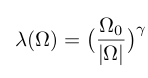
They consider a single band superconductor described by the strong-coupling Eliashberg equations where the frequency dependence of the (effective) electron-electron attraction is given by
where the exponent gamma is treated as a variable. The Eliashberg equations are solved (for a single band) and give the following relationship between the gap ratio and the exponent gamma.
The value of gamma=1.2 is that associated with the relevant Kondo problem above the coherence temperature. The gap ratio corresponds to the black dashed line in the graph below.

One thing should be stressed here is that one is observing a transition from an incoherent metal into a superconductor, unlike in the BCS situation where the transition is from a coherent Fermi liquid.
I thank Alejandro Mezio for bringing the paper to my attention.

Wednesday, May 30, 2018

Broken symmetry, order, and entropy

One of the greatest joys of teaching is having students ask questions that you do not know the answer to. In the last week of the course PHYS2020 Thermodynamics and Condensed Matter Physics for second year undergrads at UQ, I give two lectures about critical points, universality, critical exponents, broken symmetry, order parameters, and Landau theory.

Many students find this quite challenging. However, I think it is important that students be exposed to two of the most important ideas of theoretical physics from the twentieth century: broken symmetry and universality. Furthermore, there is no technical reason why second year undergrads cannot learn this material. Since the text, Thermal Physics by Schroeder, does not cover this material we have finally settled on a chapter from a book by Hoch.

After my last lecture, a student asked an excellent question along the lines of
"Why is it that broken symmetry occurs at lower temperatures?
How is this related to entropy and order?"

This led me to wondering whether there were any rigorous results that answer the question. I could not find anything in a quick search.
Do you know of anything?

I was wondering whether something like the following conjecture was true:
Conjecture. Consider a physically reasonable Hamiltonian H for an infinite system. Suppose H is invariant under some symmetry group G. Let rho(T) be the equilibrium density matrix at temperature T. Then for sufficiently large T, rho(T) is also invariant under G.
Maybe this is equivalent to
Lemma. At sufficiently high temperatures, the von Neumann entropy S (rho) = - Tr( rho ln (rho)) is maximal if rho is invariant under G. 
This looks to me like the kind of thing that people like Elliot Lieb, David Ruelle, Y. Sinai, ... might have tackled at some point.

I welcome ideas and suggestions.

Tuesday, July 12, 2016

Universality in mathematics

Physicists tend to think of universality (the details don't matter)  as a physical phenomena. However, in the early days of this blog I posted about how I became aware that the central limit theorem in mathematics is an example of universality.

Terence Tao has a nice article intended for a popular audience ,“E pluribus unum: from complexity, universality” that gives several examples of universality in mathematics and physics. The figures are particularly nice.
Some of the examples given include the law of large numbers, the central limit theorem, and Benford's law.


 "A histogram of the first two digits of accounts payable data of a major software company, together with the Benford's law prediction. (Source: Journal of Accountancy)"

The nicest part of the article is the discussion of the connections between random matrix theory, energy level spacings in nuclear physics, and the spacing of prime numbers and zeros of the Riemann zeta function. Universality is reflected in them all being described by the same probability distribution.


"A histogram of spacings between bus arrival times in Cuernavaca (Mexico), in crosses; the solid line is the prediction from random matrix theory. (Source: Krbalek-Seba, J. Phys. A., 2000)"


"Spacing distribution for a billion zeroes of the Riemann zeta function, and the corresponding prediction from random matrix theory. (Source: Andrew Odlyzko, Contemp. Math. 2001)"

These connections between mathematics and physics raise subtle philosophical questions as to whether the emergence of universality in physics is "just" a reflection of universality in mathematics.

Wednesday, July 2, 2014

Key concepts in glasses, I.

In 1995 a group of distinguished scientists were asked by Science magazine about outstanding problems that should receive attention in the following decade. The answers are compiled here, and ironically entitled, "Through a glass lightly". Phil Anderson said:
The deepest and most interesting unsolved problem in solid state theory is probably the theory of the nature of glass and the glass transition. This could be the next breakthrough in the next decade.
Although I know this remains an important problem it has been a bit of a mystery to me. However, my understanding has increased by hearing a couple of nice talks in Telluride by David Reichman. This has been solidified [pun intended!] by reading a very accessible (and short) review Supercooled liquids and the glass transition by Pablo Debenedetti and Frank Stillinger. I think I now have a crude/basic understanding of a few of the key ideas including
  • defining the glass transition temperature
  • strong versus fragile glasses
  • dynamical heterogeneity
  • violations of the Stokes-Einstein relation between viscosity and diffusion constant
  • mode coupling theory
Hopefully, I will post about some of these. First, here is the "Angell plot" that distinguishes strong and fragile glasses. It shows the viscosity [on a logarithmic scale] of a supercooled liquid [i.e. a liquid that has been rapidly cooled to below its melting temperature] vs. Tg/T where T is temperature and Tg is the glass temperature. The latter can actually be defined as the temperature at which the viscosity becomes 10^13 poise. [For comparison the viscosity of water at room temperature and pressure is about  0.01 poise!].
In a normal liquid the temperature dependence of the viscosity is activated [eta ~ exp (A/T) and so this plot should give a straight line. (Arrhenius behaviour).

Angell made this plot in 1995 for a wide range of glasses and found they fell into two distinct categories, that he defined as strong and fragile.

The horizontal scale is from 0 to 1.
Note that the data on the vertical scale covers 15 orders of magnitude!

 The strong glasses have a simple activated form for the temperature dependence of the viscosity. The fragile glasses have an activation energy that increases with decreasing temperature.
It is amazing that such chemically and structurally diverse systems exhibit such universal behaviour.

Thursday, June 20, 2013

Ken Wilson (1936-2013): pioneer of the renormalisation group

Ken Wilson died last saturday. He was arguably one of the most important theoretical physicists of the second half of the twentieth century. He pioneered the marriage of quantum field theory techniques with condensed matter. He developed key concepts and methods including scaling, universality, the renormalisation group, epsilon=4-d expansions, numerical solution of the Kondo problem, and lattice gauge theory.

I first heard of Wilson as a first year undergraduate when I read his 1979 Scientific American article, Problems in physics with many scales of length. I had no idea what it was all about. When I was a postdoc at Ohio State he had an office near mine. Then he was mostly interested in science education reform.

There are obituaries at Ohio State  and Cornell.
A previous post considers Wilson's comments about quantum chemistry, in a long and meandering interview about his career.

What does this movie tell us about the modern university?

Last night, my wife and I watched the movie, Wit. You can watch the full movie here  (free with ads). I should warn that some of the conten...