Frank Fenner (1914-2010), one of Australia's most distinguished scientists died this week. He was an immunologist who is best known for leading the world-wide eradication of the smallpox virus and for introducing myxomatosis to stop the rabbit plague in Australia. The latter led to an interesting study in evolution and genetics, described in a recent Cambridge University Press book, Myxomatosis he recently co-authored (in his nineties!).
He was also author of a classic text, Medical Virology, first published in 1970, now in its fourth edition.
I partly know of Fenner because my father knew him, through working at the John Curtin School of Medical Research (JCSMR) at the ANU in Canberra. The prolific Fenner also wrote an exhaustive history of the JCSMR. [Three Nobel Prizes have been awarded for work done in the JCSMR].
What has immunology got to do with emergence and physics? I have always been fascinated by the existence of the Reviews of Modern Physics article, Immunology for physicists.
Sunday, November 28, 2010

Saturday, November 27, 2010
Abramowitz and Stegun online
This morning I was at home struggling with some Bessel function identities. I really wanted to look at the copy of Abramowitz and Stegun: Handbook of Mathematical Functions that I have in my office but, I discovered that the complete text is available online.
I know Wolfram Mathworld can be useful but it does not have the same level of detail as A&S.
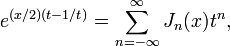
I know Wolfram Mathworld can be useful but it does not have the same level of detail as A&S.

Friday, November 26, 2010
Research income is a good measure of ...
While on the subject of money .... Research income is a good measure of .... research income, and not much more. Consider the following:
Obituaries and Nobel Prize citations do not mention how much research income someone received.
Grants are a means to an end, not an end in themselves. Sometimes they are necessary to do good research, either to hire people to do the work, or to purchase or build equipment. But, grants are not a sufficient condition to do good research.
Many significant discoveries, especially experimental ones, come from people doing "tabletop" science with small budgets. The discovery of graphene is a significant example.
A distinguished elderly colleague expressed his disappointment to me that his department newsletter was always trumpeting the grants that people got. He asked, "Why aren't there any articles about what discoveries they make with the money?"
I find it easier to get grants than to do really significant and original research. As I have posted before, the latter is very hard work. I doubt I am alone in this.
Grant writing involves a different skill set from actually doing the research. Most people are more adept at one than the other.
A more interesting metric than research income or total number of papers is the ratio of the two quantities. Citations and the h-index are better. But, in the end there is only one meaningful and worthwhile measure of research productivity: creation of significant new scientific knowledge. Don't forget it and get distracted by endlessly chasing money or comparing your income to others.
Obituaries and Nobel Prize citations do not mention how much research income someone received.
Grants are a means to an end, not an end in themselves. Sometimes they are necessary to do good research, either to hire people to do the work, or to purchase or build equipment. But, grants are not a sufficient condition to do good research.
Many significant discoveries, especially experimental ones, come from people doing "tabletop" science with small budgets. The discovery of graphene is a significant example.
A distinguished elderly colleague expressed his disappointment to me that his department newsletter was always trumpeting the grants that people got. He asked, "Why aren't there any articles about what discoveries they make with the money?"
I find it easier to get grants than to do really significant and original research. As I have posted before, the latter is very hard work. I doubt I am alone in this.
Grant writing involves a different skill set from actually doing the research. Most people are more adept at one than the other.
A more interesting metric than research income or total number of papers is the ratio of the two quantities. Citations and the h-index are better. But, in the end there is only one meaningful and worthwhile measure of research productivity: creation of significant new scientific knowledge. Don't forget it and get distracted by endlessly chasing money or comparing your income to others.
Money changes you
Phil Anderson finishes his classic More is Different article from Science in 1972 with the cheeky and amusing conclusion:
Marx said that "Quantitative differences become qualitative ones." But a dialogue in Paris from the 1920’s sums it up even more clearly:I often wondered what this was all about. It is worth reading Quote/Counterquote which explains that the dialogue never actually happened.
FITZGERALD: The rich are different from us.HEMMINGWAY: Yes, they have more money.
Thursday, November 25, 2010
Faculty position in Melbourne available
I was asked to publicise a position in Condensed Matter Theory that has been advertised at University of Melbourne. I am always keen to see more Condensed Matter Theory in Australia!
All the details are here.
I believe that applications will still be received for a week or two after the advertised closing date (30 November), but after the closing date should also be submitted directly to ProfessorLes Allen or Professor Lloyd Hollenberg.
All the details are here.
I believe that applications will still be received for a week or two after the advertised closing date (30 November), but after the closing date should also be submitted directly to Professor
Wednesday, November 24, 2010
Possible origin of anisotropic scattering in cuprates
Previously I posted about the anisotropic scattering scattering rate in the optimally doped to overdoped cuprates. Both Angle-Dependent Magnetoresistance (ADMR) and Angle-Resolved PhotoEmission Spectroscopy (ARPES) suggest that it has a d-wave variation around the Fermi surface and that it has a "marginal Fermi liquid" dependence on energy and temperature. ADMR measurements found that the strength of this scattering scales with the transition temperature, and hence increases as one moves towards optimal doping.
This raises three important questions:
1. What is the physical origin of this scattering [and the associated self energy]? Superconducting, D-density wave, antiferromagnetic, or gauge fluctuations?
2. Is this scattering relevant to the superconductivity? i.e., do the same interactions produce the superconductivity and/or do these interactions make the metallic state unstable to superconductivity?
3. Is this relevant to formation of the pseudogap in the underdoped region? e.g., as the self energy increases in magnitude with decreasing doping does the pseudogap just result from new poles in the spectral function?
I focus here on possible answers to 1. as there are already some attempts to answer this question in the literature. Back in 1998, Ioffe and Millis published a PRB paper focusing on the phenomenology of such a scattering rate but Section IV of their paper considered how superconducting fluctuations could produce an anisotropic scattering rate. They suggested that in the overdoped region the rate should scale with T^2, but it should be kept in mind this depends on what assumptions one makes about the temperature dependence of the correlation length.
Walter Metzner and colleagues have been investigating D-density wave fluctuations near a quantum critical point associated with a Pomeranchuk instability [A PRL with Dell'Anna summarises the main results, including a scattering rate which scales with temperature]. Their starting point is an effective Hamiltonian which has a d-wave form factor built into it. But this is motivated by an earlier PRL which found that the forward scattering they deduced for the Hubbard model from renormalisation group flows.
Maslov and Chubukov have also published papers on the subject, such as this PRB.
This raises three important questions:
1. What is the physical origin of this scattering [and the associated self energy]? Superconducting, D-density wave, antiferromagnetic, or gauge fluctuations?
2. Is this scattering relevant to the superconductivity? i.e., do the same interactions produce the superconductivity and/or do these interactions make the metallic state unstable to superconductivity?
3. Is this relevant to formation of the pseudogap in the underdoped region? e.g., as the self energy increases in magnitude with decreasing doping does the pseudogap just result from new poles in the spectral function?
I focus here on possible answers to 1. as there are already some attempts to answer this question in the literature. Back in 1998, Ioffe and Millis published a PRB paper focusing on the phenomenology of such a scattering rate but Section IV of their paper considered how superconducting fluctuations could produce an anisotropic scattering rate. They suggested that in the overdoped region the rate should scale with T^2, but it should be kept in mind this depends on what assumptions one makes about the temperature dependence of the correlation length.
Walter Metzner and colleagues have been investigating D-density wave fluctuations near a quantum critical point associated with a Pomeranchuk instability [A PRL with Dell'Anna summarises the main results, including a scattering rate which scales with temperature]. Their starting point is an effective Hamiltonian which has a d-wave form factor built into it. But this is motivated by an earlier PRL which found that the forward scattering they deduced for the Hubbard model from renormalisation group flows.
Maslov and Chubukov have also published papers on the subject, such as this PRB.
A key question is what experiments might be a smoking gun to distinguish the different origin of the scattering. I wonder whether the observed weak dependence of the scattering on magnetic field [at least up to 50 Tesla] may help.
Monday, November 22, 2010
A beast of an issue
If you don't think mental health problems will strike anyone you know it is worth reading this column by Kathleen Noonan which appeared in our local newspaper a few weeks back.
Subscribe to:
Posts (Atom)
What does this movie tell us about the modern university?
Last night, my wife and I watched the movie, Wit. You can watch the full movie here (free with ads). I should warn that some of the conten...

-
 This week Nobel Prizes will be announced. I have not done predictions since 2020 . This is a fun exercise. It is also good to reflect on w...
 -
 The Ising model is a paradigm in both statistical mechanics and condensed matter physics. Today for most theorists it is so familiar that so...
 -
 Nitrogen fluoride (NF) seems like a very simple molecule and you would think it would very well understood, particularly as it is small enou...